How to Write Perfect Interfaith Wedding Invitations
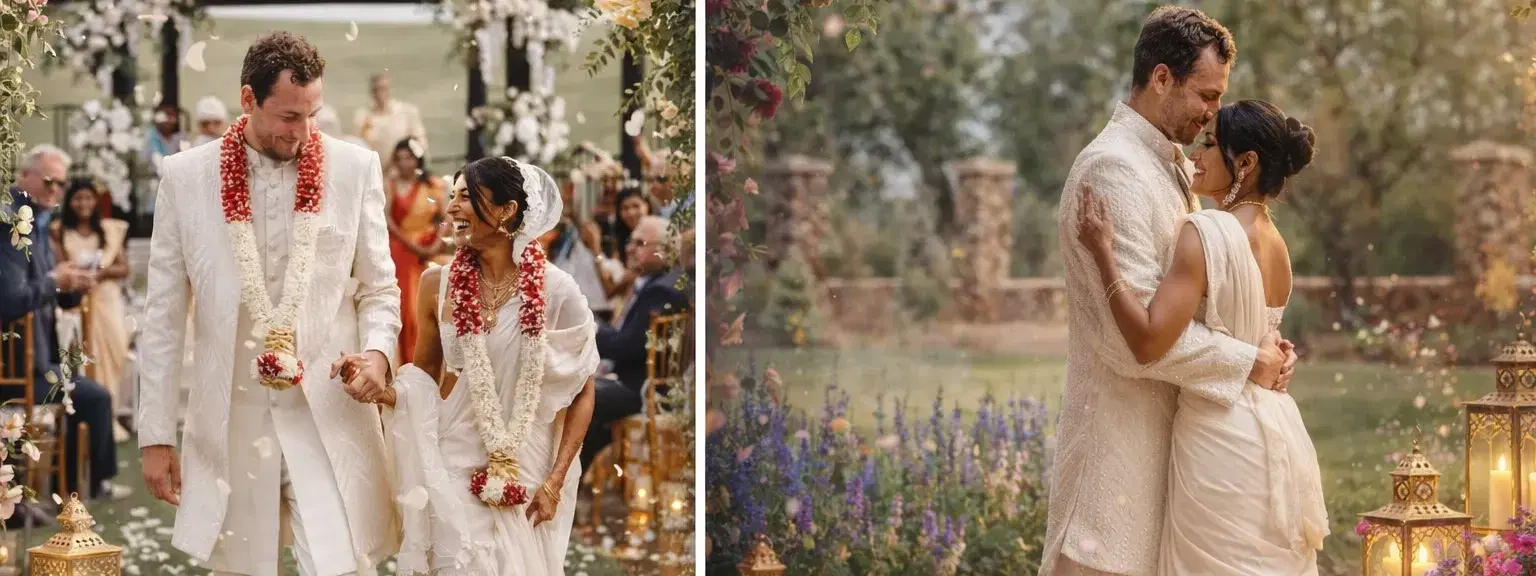
Your love story bridges two beautiful traditions, and your wedding invitations should celebrate that unity. Writing wedding invitation wording for interfaith couples means finding language that honors both backgrounds while welcoming everyone to your celebration. The key is creating invitations that feel authentic to your relationship and respectful to all your guests.
Interfaith wedding invitations require thoughtful balance. You're not just announcing a party; you're introducing guests to a celebration that might blend unfamiliar traditions. Some guests may wonder what to expect, what to wear, or how to participate respectfully.
The most important rule? There are no rigid rules. Your invitation should reflect your unique story and the type of ceremony you're planning. Whether you're having separate religious ceremonies, a blended service, or a secular celebration with cultural elements, your wording should prepare guests for what they'll experience.
Start by discussing expectations with both families. Some may have strong preferences about religious language or traditional phrasing. Finding common ground early prevents last-minute stress and ensures everyone feels respected in your wedding invitation etiquette interfaith approach.
Every interfaith invitation needs certain core elements: clear ceremony details, appropriate tone, and inclusive language. Begin with who's hosting the celebration. This might be both sets of parents, just the couple, or a combination that reflects your family dynamics.
For the ceremony description, choose words that accurately represent your plans without alienating guests. Instead of "sacred ceremony," try "wedding ceremony." Rather than "holy matrimony," consider "marriage celebration." These subtle changes maintain reverence while staying inclusive.
Complex family structures need careful attention in your blended family wedding wording. When multiple parents are involved, list them in a way that feels natural and honors everyone's role. You might write: "Together with their families, Sarah and Michael invite you..." This approach includes everyone without complicated explanations.
For honoring deceased family members from different faith backgrounds, keep the language simple and universal: "Sarah, daughter of Linda and the late Robert..." This phrasing respects memory without religious specificity.
Creating non denominational wedding invitations means choosing words that welcome everyone. Replace faith-specific terms with universal concepts. Instead of "blessed union," try "joyful union." Rather than "God's grace," consider "with gratitude and joy."
Inclusive wedding invitation phrases focus on love, commitment, and celebration. Think "as we unite our lives," "in the presence of family and friends," or "to witness our commitment." These phrases create warmth without excluding any belief system.
Your ceremony location description matters too. "At the beautiful gardens of..." works better than "in the sanctuary of..." if you want to keep things neutral.
Pro Tip: The Universal Language of Love
Focus on what unites rather than what divides. Words like "celebration," "commitment," "unity," and "joy" resonate across all backgrounds and create the welcoming tone you want for your special day.
Here are practical wedding invitation wording examples for common interfaith partnerships:

Christian-Jewish couples: "Sarah and David invite you to celebrate their wedding ceremony as they unite their lives in love and commitment."
Hindu-Christian celebrations: "With joy in our hearts, Priya and James request your presence as they begin their journey together in marriage."
Muslim-Christian ceremonies: "Amira and John, together with their families, invite you to witness their marriage celebration."
These multicultural wedding invitations avoid religious specificity while maintaining elegance and warmth. Adapt the language to match your ceremony style and family preferences.
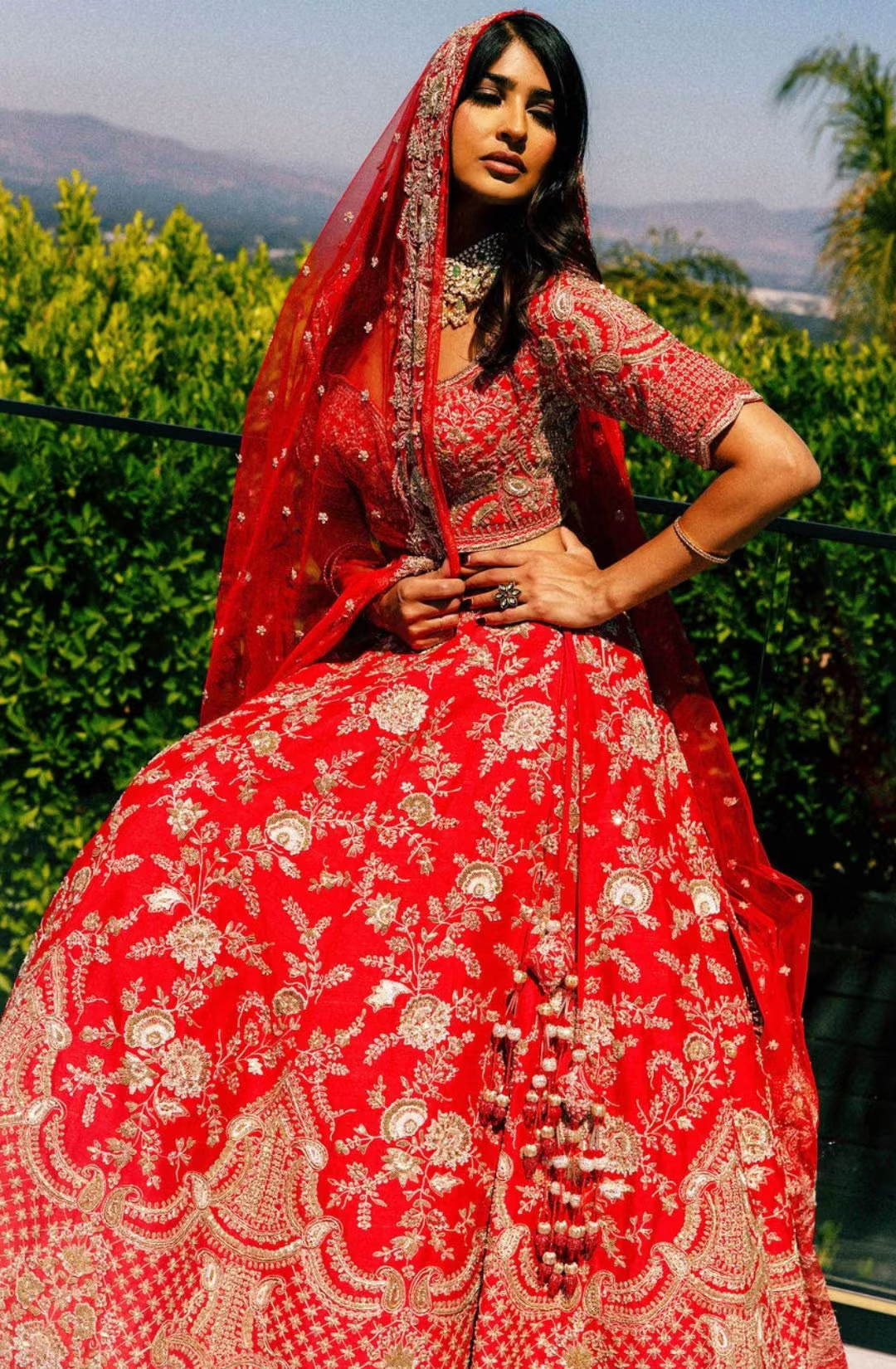
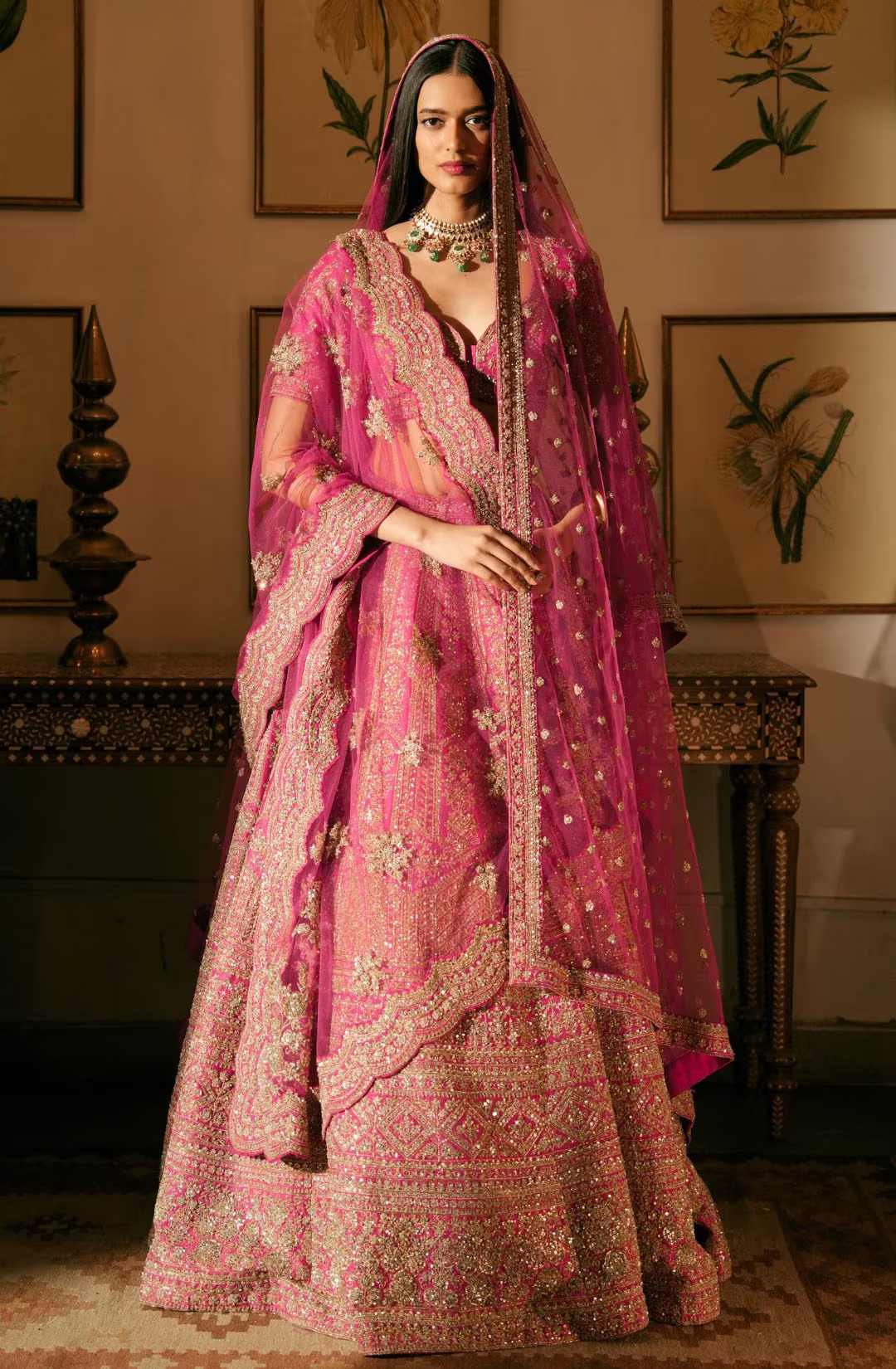
Visual elements can honor both backgrounds without overwhelming your design. Consider incorporating colors meaningful to both traditions, or choose neutral tones that complement both cultures. Simple geometric patterns often work across different wedding traditions.
If your interfaith ceremony invitation includes multiple languages, ensure proper translation and cultural accuracy. Sometimes a simple English invitation with cultural design elements strikes the perfect balance.
Typography choices matter too. Elegant, readable fonts work universally, while overly decorative scripts might not translate well across different cultural contexts.
List both ceremonies clearly with separate time and location details. You might write: "Wedding ceremony at 2:00 PM, followed by celebration at 6:00 PM" with respective addresses.
A brief note on a separate card can help guests prepare. Something like "Our ceremony will blend traditions from both our backgrounds" gives helpful context without lengthy explanations.
Focus on compromise and communication. Consider creating slightly different versions for different guest lists, or find middle-ground language that respects both perspectives while staying true to your vision.
Include a simple note like "Kosher and halal options available" or "Please indicate dietary preferences" on your RSVP card to ensure all guests feel welcomed and accommodated.
Yes, but keep them brief and consider placement carefully. A short blessing on a separate ceremony card works well, or you might include them in your program rather than the main invitation.
Writing perfect interfaith wedding invitations comes down to authenticity, respect, and clear communication. Your invitations set the tone for a celebration that honors both your backgrounds while creating new traditions together. Focus on the love that brought you together and the joy you want to share with everyone who matters to you. The right words will naturally follow when you speak from the heart about your unique journey.