-9e9fc019-a4dc-41d5-b849-bad793a2721d.webp&w=3840&q=75)
Wedding Planning
•07 min read
The most IG-worthy engagement and wedding portraits happen when the light, the location, and your comfort with the camera all show up understanding the assignment. Good news…all of this is entirely achievable. Most portrait quality comes down to the decisions you make in the weeks BEFORE the shoot, not on the day itself.
Here's the full guide to prepping for engagement photos and wedding day portraits—what to wear, where to shoot, what to bring, and how to build your timeline so nothing gets rushed. If you're looking specifically for the hour-by-hour wedding day photography timeline, see our companion piece on that topic.
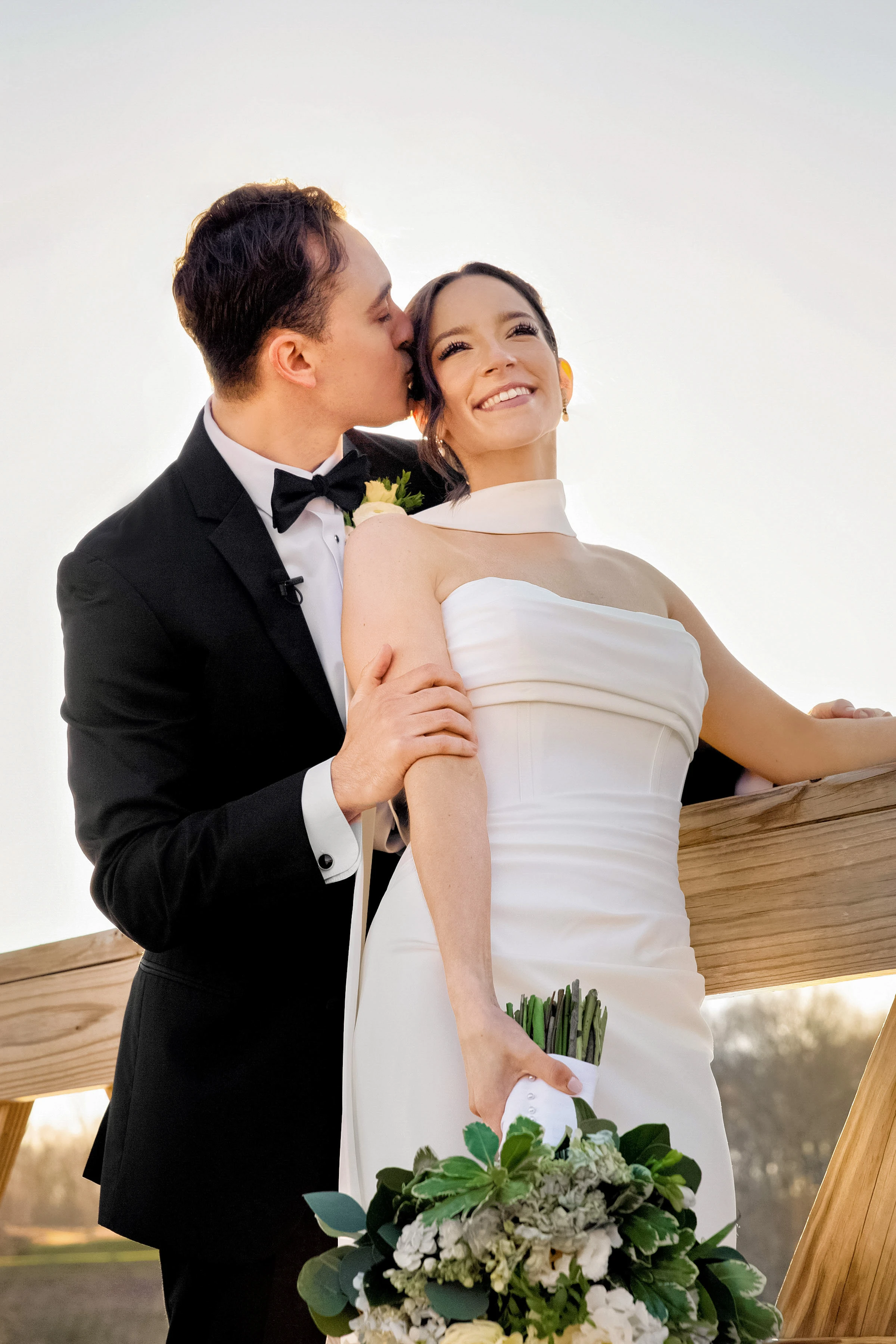
Your engagement session is most likely your first professional shoot as a couple, and it's the one that lets you actually EXPERIMENT—with location, wardrobe, style, mood, and props—before the wedding day when the plan is locked. Here's how to make it count.
The best engagement photos usually start outside. Parks, botanical gardens, lakefronts, open fields, and tree-lined paths give you natural backdrops, beautiful light, and room to actually move. Let the season work for you—fall foliage, spring blooms, summer golden hour, winter frost.
If outdoors isn't your thing, indoor works too. Libraries, airplane hangars, historic buildings, and architecturally interesting venues all photograph beautifully. The more intentional the setting, the more the photos feel like YOU.
Your engagement photos will live on your wedding website, your save-the-dates, your social media, and—spoiler alert—probably your parents' fridge for the next twenty years. Dress for the shots you want to have later.
That doesn't mean dressed up. Casual works. Dressed up works. Matching outfits work. Complementary color palettes work. The only wrong answer is dressing in a way that doesn't feel like YOU.
If you want to be more deliberate about it, pick a bold color that pops in photos, coordinate palettes so your outfits complement each other, or go fully monochromatic for a striking editorial look. Lots of brides choose to don their first LWD (little white dress, that is) for the occasion. Even the location becomes part of the color story—think about how your wardrobe interacts with the background.
Statement accessories deserve their own callout: an oversized hair bow, sculptural pearl earrings, opera-length gloves, or a dramatic bow-detailed veil. This is the shoot to try them (one or all, we won’t judge). They add visual interest and give your photographer more to work with in composition and detail shots.
And practically: comfortable shoes if you'll be walking, layers if it's cold, breezy fabrics if it's warm, water in a bag off camera. Physical comfort keeps you relaxed in front of the camera—which is where the best photos come from.
Getting comfortable in front of the camera is 90% of the work of great engagement photos. Your photographer will guide you through poses—a slow walk hand in hand, a forehead touch, a spontaneous dip, leaning in for a laugh—but the shots that actually stick are usually the candids in between the poses.
Whisper something funny to your partner. Try a pose you think looks goofy. Follow the photographer's lead when they suggest something weird. Couples who play around ALWAYS get better photos...it’s just science. The camera catches the moments in between more than it catches the poses themselves.
Props add whimsy, personality, and romance. They also give you something to DO with your hands, which is half the trick to looking natural (seriously, why can we never figure out what to do with our hands?!).
Personal-history props: the coaster from your first-date spot, matching tour tees from the concert you met at, the plant you've kept alive together, a book one of you gave the other (very Dua Lipa and Callum Turner). These photograph like they mean something because they actually do.
Analog cameras: film cameras, Polaroids, disposable cameras—held in the shot, not just used to take extra photos (but we ARE loving film photos). Analog is one of the most-photographed aesthetic revivals of the last two years, and we’re running with it hard.
Season-forward, modernized: coffee cups from your favorite spot in winter, cherry blossoms in spring, a rooftop cocktail in summer, farmers-market flowers in fall.
A vehicle you'd actually use: a bike, a Vespa, a family friend's classic car, a golf cart at a lake weekend. Anything you'd actually be leaning against or riding in real life.
Sports props, if it's genuinely your thing: matching hats or jerseys, a drink from your favorite tailgate, gear from a hobby you share. This only works if the sport is real to you as a couple, not shoehorned in for the shot.
A single statement piece: one oversized ribbon in a bold color. One balloon (not a bouquet of them). A real bouquet of flowers you actually love, not the Pinterest interpretation of one.
And a specific pro tip: even if you're not using engagement photos as your official save-the-dates, GET THE SHOT. Include a chalkboard sign or a sports ball with your wedding date on it. That single image gives you wedding-website content, social-post content, and last-minute save-the-date content you'll thank yourself for later.
Pets, kids, family members—anyone who's part of the life you're building together is welcome at an engagement session. If you have a dog, bring them along with a designated helper to manage the leash during solo shots, and pack plenty of treats. Some of the most heartfelt photos of the entire session are the ones with pets or family in frame.
Natural light is the most flattering light there is. Schedule your session during golden hour—the 30-to-60-minute window right before sunset—for the warmest, softest, most beautiful light of the day. It's the single most impactful decision you can make about your engagement session.
If you're shooting indoors, look for locations with large windows and abundant natural light. If you're shooting outdoors on an overcast day, don't panic—the diffused light is actually flattering (no harsh shadows, no squinting).
We've written separately about the full hour-by-hour wedding day photography timeline—when to schedule the first look, how long to budget for family portraits, when to sneak away for a night session. That's the LOGISTICAL playbook.
This section is about the other half: the CRAFT of looking natural in your wedding day portraits when the moment actually arrives. Six things that separate the wedding portraits you love from the ones you tolerate.
They've done this hundreds of times. If they suggest something that feels weird—the big dip, the forehead touch, the "walk away from me and look back" pose—do it. Wedding photographers make specific direction calls because those directions produce specific results. Don't second-guess in the moment. Trust the process and see the gallery.
The rehearsed "photo smile" always shows. Better options: laugh at something (real or acted). Look at your partner instead of the camera. Close your eyes and reopen them slowly right on the shutter. The most flattering wedding portraits are almost never the ones where the bride is smiling directly at the lens.
Idle hands become tense hands, and tense hands photograph exactly the way they look. Give yourself something to do: hold the bouquet. Hold your partner's hand. Adjust your veil. Sip champagne. A hand doing something is a hand at rest.
Every bride has one shot she'd frame—the dress hanging alone, the ring detail, the veil-in-motion, the barefoot end-of-night. Tell your photographer about it 24 hours before the wedding (not on the day). Give them the mental space to plan for it.
Not with your partner. Not with your wedding party. Not with your dog. Just you, in your dress, looking iconic. This is one of the most-requested wedding day portraits and one of the most commonly under-planned. Ask for it explicitly. Book a specific 5 to 10 minutes for it.
The best wedding day photos aren't the posed ones—they're the ones where you're actually feeling something. The tearing up during vows. The huge laugh at a speech. The moment you spot your grandmother in the crowd. Being present is a technique. When you're actually there, in the moment, your photographer catches it. When you're mentally running through the timeline, they don't.
Some engagement and wedding day portrait moments require more than a good camera—they require a photographer who knows how to draw out real, relaxed moments and works to a timeline you built together.
George Street Photography has been photographing weddings and engagement sessions for over 40 years, and they've built their whole client experience around the exact kind of preparation we've just walked through. Here's how they work.
After you book, George Street matches you with a photographer based on your personal style through their Style Test. That means the photographer assigned to your engagement session (and often your wedding day, if you book both) already aligns with the aesthetic you've been building on your vision board.
Every couple gets a dedicated George Street wedding coordinator to answer questions about timing, coverage, wardrobe, prop ideas, and what to expect on the day. Which means when you have a late-night moment of "wait, do we bring the dog to the engagement session?"—there's someone to ask.
George Street's online Planning Portal walks you through building your full engagement and wedding day shot list: locations, timing, must-have shots flagged, prop ideas noted, inspiration images uploaded, and family notes captured. The more detail you share upfront, the smoother the shoots run.
By the time your engagement session or wedding day arrives, your photographer already knows your vision, your priorities, and your story. Which means when you show up on shoot day, all you have to do is show up and BE there. That's the point of doing the prep work upfront—so the day itself is yours.
The couples who love their engagement and wedding portraits the most aren't necessarily the ones with the most expensive photographers or the most Pinterest-worthy locations. They're the couples who prepped. Location scouted. Wardrobe planned. Props gathered. Timeline padded. Photographer briefed.
Book George Street Photography for your engagement session and wedding day, and use Pearl Planner to keep your shot list, timeline, and vendor coordination in one place. The camera loves preparation. So do you, three months later, when the gallery goes live.
[This is a sponsored post in partnership with George Street Photography.]