Wedding Planning
•08 min read
Your wedding photos are the one thing from your big day that outlive everything else. The dress will hang in your closet. The flowers will be gone by Monday. The cake will be in a Tupperware in your freezer—at least until your first anniversary. But the photos are what you'll actually pass down—to your kids, to their kids after that, and to your future self on your 30th anniversary. This is exactly why your wedding photography plan is worth building intentionally.
The good news? Wedding photography timelines are easily one of the most solvable parts of the entire planning puzzle. Each moment happens in a reasonably predictable order. The time every part takes is fairly consistent. And when you plan the day right, your photographer gets to spend the day making art—not managing logistics.
Here's the full wedding day photography timeline, from the morning bridal-suite details to the sparklers-and-getaway-car finale.
The photos on your wedding day work best if the prep for those photos happens in the weeks leading up to it. Here's what you’ll want to lock down before the day itself.
Before your photographer arrives, they should already know your priorities. That means the full day-of timeline, exact times and locations for each moment, your must-have shot list, notes about specific guests to include in portraits, and any sentimental or family moments you want captured. This is where a shared vision pays off—if you share the exact aesthetic you've been building on your Pearl Planner Vision Board with your photographer, they can match the mood of the photos to the mood of the whole day. Then use your photography team's dedicated planning portal (George Street Photography's Planning Portal, for instance, walks you through this step by step) to translate the vision into a day-of shot list. The more detail you share upfront, the smoother the whole day runs.
Rings. Shoes. Jewelry. The garter. Cufflinks. The invitation suite. The veil. The dress. Handwritten vows. A family heirloom. Anything sentimental that deserves to be captured as a still-life detail shot. Get every single one of these into one designated spot in the bridal suite before your photographer walks in. Losing 15 minutes hunting for the second earring is 15 minutes the photographer isn't capturing you.
One photographer can only be in one place at a time. But two? Two can be in both getting ready spaces, the first look from each of you at once, cocktail-hour candids AND the remaining family portraits. If your budget can absorb it, book the second photographer. The first look coverage alone is often worth the upgrade—one captures your reaction, the other gets your partner's.
Eight hours is the industry-standard starting point for full-day wedding coverage—it gets you from getting-ready in the morning through the major reception moments in the evening. Anything shorter and something meaningful is going to get cut. Also worth noting: coverage hours run consecutively from the moment the photographer starts shooting. You can't pause the clock between the ceremony and the reception. Plan your timeline accordingly.
If you're moving between multiple locations—getting-ready venue, ceremony space, reception—build buffer time between each. City weddings especially. Traffic doesn't care about your first-look time, and once you've lost 20 minutes stuck in a Manhattan crosstown snarl, you cannot recover that time later in the day.
Here's the hour-by-hour breakdown of every major photography moment on the wedding day, in the order they typically happen, with time estimates for each block.
The rings. The dress. The shoes. The bouquet. The boutonniere. The love letter. And any sentimental piece worth including—handwritten vows, a family heirloom, a locket that made it into your grandmother's wedding photo. Have every detail item gathered and ready before your photographer walks in. (Give this job to your maid of honor or a bridesmaid that’s waiting to get their hair or makeup done—keeps everyone busy and you stress-free!)
Your photographer should be there while your hair and makeup artist is still working. That means candid brush-through-hair shots, foundation being applied, the transformation as it's happening—not just the finished product. Keep the suite clean: toss the coffee cups, hide the phone chargers, move the empty champagne glasses out of frame. And do NOT skip your partner's getting-ready session. Some of the best candids of the whole day come from the room that's quieter and less styled—the pre-ceremony nerves, the friend who insists on a shot of whiskey, the moment a parent walks in and stops in the doorway.
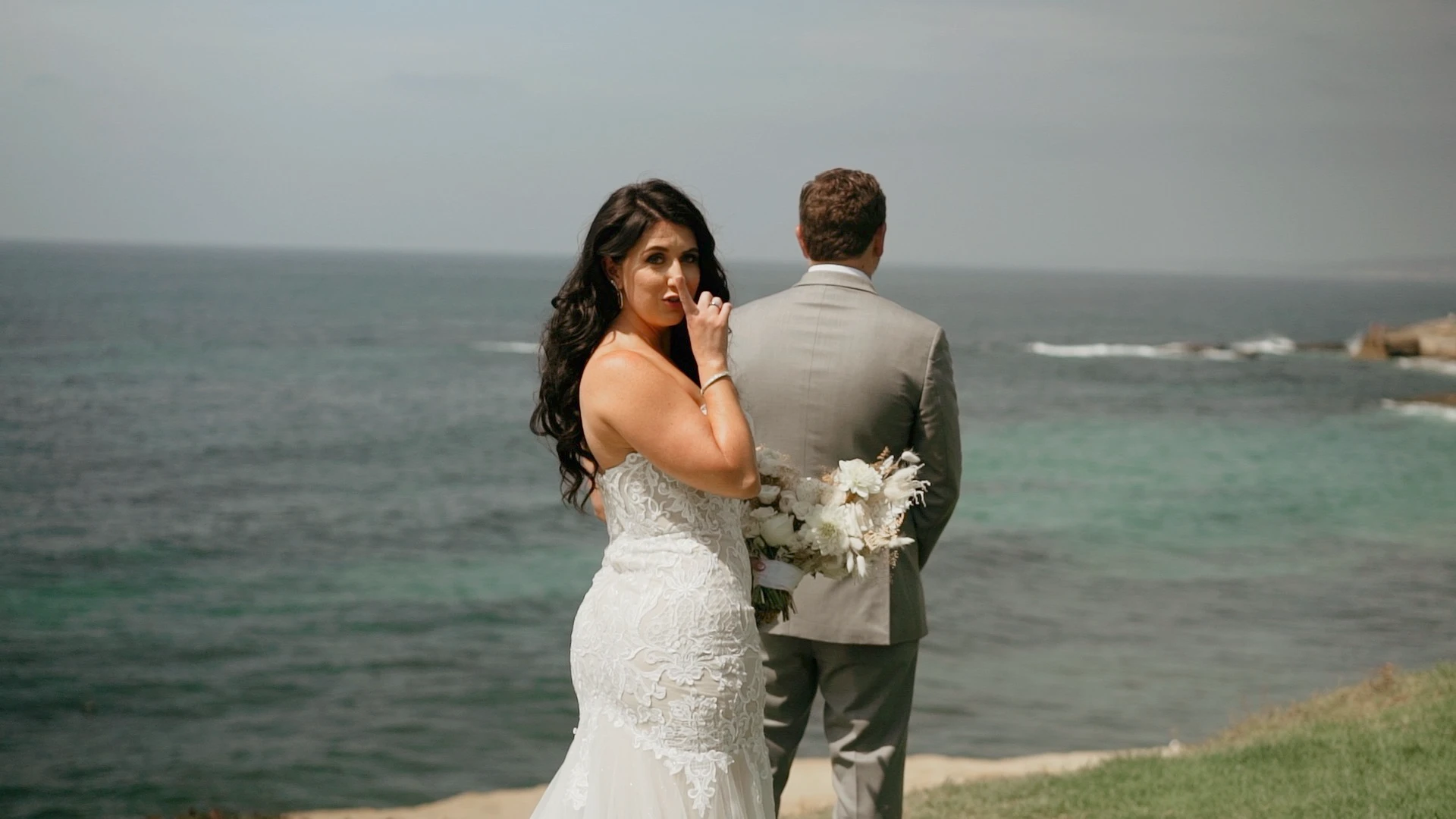
The First Look is the private moment before the ceremony where you see each other without an audience. If you're doing one—and you should consider it—give your photographer a full 30 minutes. The moments before the reveal are almost as good as the reveal itself: the tap on the shoulder, the deep breath, the smile breaking through. This is where booking a second photographer really pays off: one captures your reaction, the other captures your partner's. Both faces at once.
Plan for individual shots with each bridesmaid and groomsman, one-on-ones with the maid of honor and best man, and the full group shots. Keep it loose. Some of the most treasured photos from the day are the candid ones between the couple and their people—the belly-laugh mid-toast, the huddle before the ceremony, the quiet moment when the maid of honor fixes your veil.
Both families joined together for the big group shot, then individual configurations with each side of the family. Send family members a general timeline ahead of the day so no one is being tracked down when the photographer is ready. (No one wants to be the reason great-aunt Ruth is missing from the final family portrait.)
This is the single biggest time block on the wedding day photography timeline for a reason—60 to 90 minutes gets split between individual portraits, portraits of the two of you together, and any special moments you want captured. Try the big dip. Try holding hands and walking. Try the on-the-cheek kiss. Try the forehead-to-forehead. Trust your photographer's direction on this one—they've done this hundreds of times, and they know what looks good in a frame you'll be looking at for the rest of your life.
The ceremony decor. The processional. The exchange of vows. The first kiss. The recessional. When you're walking down the aisle, look at your partner—not the camera. That's where the most emotional images come from. If your ceremony is religious rather than civil, expect it to run longer, and pad your timeline accordingly.
Cocktail hour is prime candid-photo territory. Guest interactions, mingling, the little cheers-and-conversation moments that get lost in the reception itself. A second photographer is especially useful here—they can be capturing the room while the primary photographer wraps up any remaining portraits or wedding party moments.
Every centerpiece, every place card, every hand-lettered menu, every candlelit table you've been planning for months—your photographer needs 15 to 30 minutes to capture the space BEFORE guests fill the room. Once the room is full, the shots are candids. Before the room is full, the shots are the decor moments you invested in.
The grand entrance. The first dance. Parent dances. The cake cutting. Speeches. Bouquet and garter toss. The party. These are the biggest photo moments of the reception, and they work best if your photographer, DJ, and caterer are on the same page about timing. Do a vendor huddle ahead of the reception so everyone is calling the same beats.
Before the sun sets, sneak outside for 10 minutes of golden hour. Once it's fully dark, take another 10 to 20 minutes for a proper night session. Moonlight, string lights, and the glow from the reception create some of the most atmospheric, romantic images of the whole day. This is often when your photographer captures the shots that end up framed on your living-room wall.
Sparklers. Bubbles. Ribbon wands. Confetti. A decorated getaway car. Whatever your grand exit looks like, plan it with intention and brief your photographer on exactly what to expect. This is one of the most dramatic, joyful, and shareable images of the entire wedding—the piece that turns into an Instagram grid moment before you even leave for the honeymoon.
That's the full wedding day photography timeline—from the bridal-suite morning through the getaway-car finale. Twelve major moments, roughly 12 hours of coordination, every one of them a shot worth capturing.
For couples who don't want to build this timeline from scratch, working with a photography team that specializes in wedding day coordination is worth the investment. George Street Photography, for one, has been photographing weddings for over 40 years, and they've built their whole client experience around the exact kind of upfront planning we've been walking through. Here's how they work.
After you book, George Street matches you with a photographer based on your personal style through their quick Style Test. That means the photographer assigned to your day already aligns with the aesthetic you've been building on your mood board—no mismatch, no wondering if the person shooting your wedding actually gets you.
Every couple gets a dedicated George Street wedding coordinator to answer questions about timing, coverage, and what to expect on the day. Which means when you have that late-night moment of "wait, should we do the first look before OR after family portraits?"—there's someone to ask.
George Street's online Planning Portal walks you through building your full wedding day photography timeline: exact times and locations for each moment, must-have shots flagged, notes about specific guests to include in portraits, and any sentimental or family moments you want captured.
By the time your wedding day arrives, your photographer already knows your vision, your priorities, and your story. Which means when you walk into the bridal suite that morning, all you have to do is show up and BE there. That's the point of doing the planning work upfront—so the day itself is yours.
Book George Street Photography for your wedding day, and use Pearl Planner to keep every other piece of the day-of timeline in one place—vision board, budget, checklist, vendor recommendations, and your wedding website. Because the whole point of doing the work upfront is so that when the wedding day arrives, you're the one being photographed—not the one still building the shot list.
This is a sponsored post in partnership with George Street Photography.
Written by Andrea Pesce, Senior Copywriter at David's Bridal. Find more of her work on the David's blog.