What to Wear to an Indian Wedding as a Guest (Your Honest US Guide)
You got the invite. Maybe it's your coworker's wedding, your college roommate's, or someone in your extended family who married into a South Asian family. Either way, you're standing in your closet Googling "what do I even wear to this?" and feeling a little stuck.
That's completely normal, and you're not alone. Indian weddings in the US can span multiple events across multiple days, each with its own vibe and dress code. This guide breaks it down simply so you can show up feeling good, not overdressed, underdressed, or out of place.
Indian weddings often include several celebrations leading up to and including the main ceremony. You won't always be invited to all of them, but here's what each one typically looks like:
Mehndi (Henna Ceremony) Usually held a day or two before the wedding. It's daytime, often outdoors or at someone's home. Think: colorful, festive, relaxed. A flowy midi dress in a bright or warm tone works perfectly here. Bold prints are very welcome.
Sangeet This is the musical/dance celebration, usually the evening before the wedding. It's celebratory and energetic. Think cocktail energy, with more color and sparkle than a typical Western cocktail party. This is the event where you can go boldest with your outfit choices.
Wedding Ceremony This is the main event. Hindu, Sikh, Muslim, Jain, and other South Asian wedding ceremonies all look different, and the formality level varies by family too. When in doubt, dress on the more formal side. Floor-length or midi, embellished or richly colored fabrics, and covered shoulders where applicable are all solid choices.
Reception Often held the same evening or a separate day. This is where Indian wedding dress codes start to overlap with what you'd wear to any formal celebration. Floor-length gowns, structured jumpsuits, or festive cocktail dresses all work here.
This is genuinely the most common question, so let's just answer it clearly.
Colors that photograph beautifully and are welcomed:
Jewel tones: cobalt, emerald, magenta, ruby, sapphire
Rich warm tones: burnt orange, mustard, coral, fuchsia
Metallics: gold, copper, champagne, bronze
Deep jewel pastels: mauve, dusty rose, periwinkle
Colors to think twice about:
White and ivory are traditionally associated with mourning in many South Asian communities, so it's generally best to avoid them unless you've been specifically told it's fine.
Red is the traditional bridal color in many Hindu and Sikh ceremonies, so wearing it as a guest can feel like upstaging the bride, even unintentionally.
Black is nuanced. It's not a hard no, but it's traditionally associated with mourning in some South Asian contexts. At more modern weddings, especially receptions, black is widely worn by guests. If you're unsure, ask someone close to the couple, or layer in colorful accessories to brighten the look.
Honestly? It's welcomed and appreciated when done thoughtfully. Wearing a salwar kameez (a tunic with pants), a lehenga (a skirt-top set), or a sari as a non-Indian guest is generally seen as a respectful gesture, not cultural appropriation, especially at Indian weddings. Most South Asian hosts are genuinely happy when their guests embrace the aesthetic.
That said, it's not required. You do not need to wear South Asian clothing to be a respectful, appropriately dressed guest. A bold, colorful Western dress in a festive silhouette is completely appropriate.
If you do want to wear a sari or lehenga, a few things to keep in mind:
Choose colors in that jewel-tone range mentioned above
Avoid white or red for the ceremony events
If you're unsure how to drape a sari, a pre-stitched sari or a lehenga is much more practical
You have more options than you think. The key is: color, length, and a little bit of shimmer or embellishment goes a long way.
Floor-length gowns in jewel tones or metallics for the ceremony or reception
Embellished midi dresses for sangeet
Printed wrap dresses for mehndi
Sequin or beaded styles for evening events
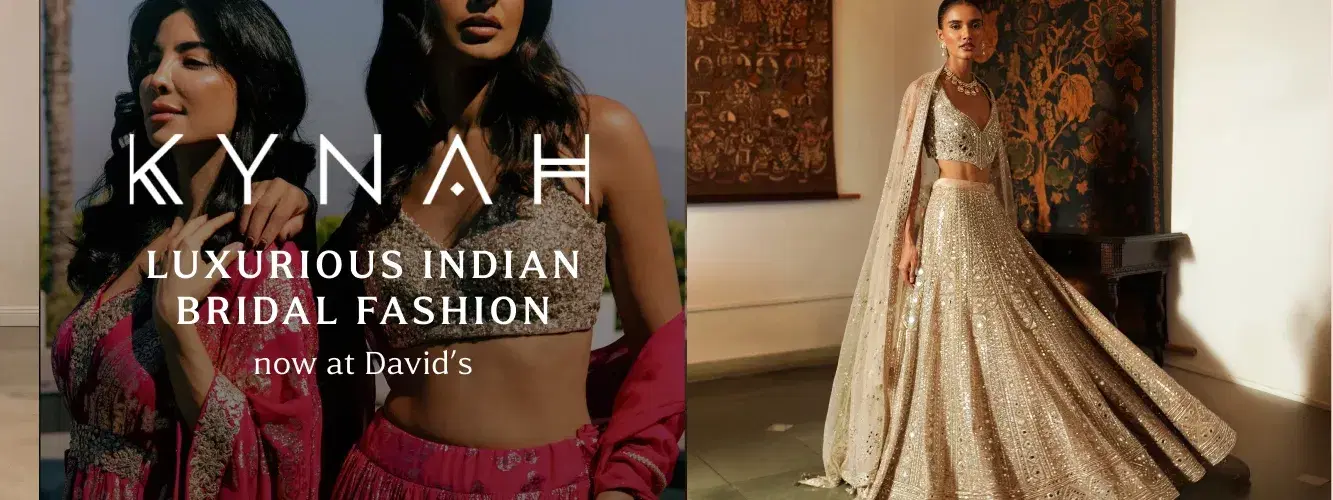
At David's Bridal, our KYNAH by David's Bridal collection was designed specifically with South Asian celebrations in mind, in partnership with designers like Seema Gujral, Jayanti Reddy, House of Masaba, Amit Aggarwal, and Tamanna Punjabi Kapoor. The silhouettes, embellishments, and color palette translate beautifully for Indian wedding guests too, not just brides. Whether you're a size XS or 3XL, there are options built for this kind of celebration energy.
If you'd like help pulling a look together, you can book a free styling appointment, in-store or virtual.
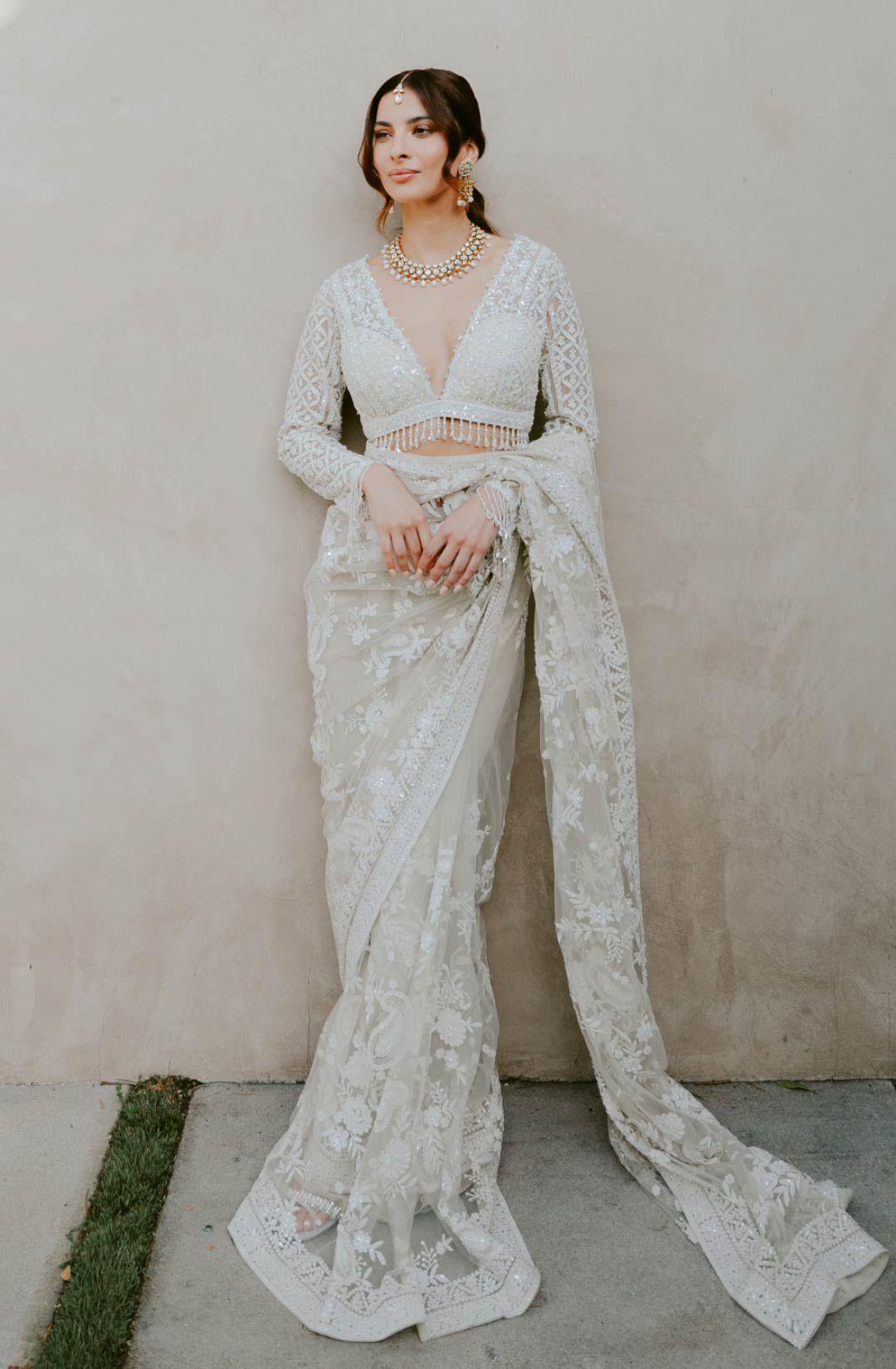
More is genuinely more here. Indian weddings are visually rich celebrations, and wearing statement jewelry doesn't feel out of place the way it might at a lower-key event.
Chandelier earrings, layered necklaces, stacked bangles or cuffs all work
Gold tones tend to photograph especially well
Embellished clutches or metallic heels complete the look
If you're wearing South Asian attire, traditional jewelry like jhumkas (drop earrings) or a maang tikka (forehead piece) are beautiful choices, but entirely optional.
Depending on the ceremony type, you may be asked to remove shoes when entering a religious space (like a mandir or gurdwara). Slip-on heels or flats are your best friends here. Also, ceremonies can run long, so comfort matters more than you might think.
If you're still unsure about something specific to the wedding you're attending, it's completely okay to ask the couple or a member of the wedding party. They'll appreciate you caring enough to ask.
Indian weddings are genuinely some of the most joyful, colorful, and memorable celebrations you'll attend. The dress code is really just an invitation to show up with intention and a little extra sparkle.
Browse our KYNAH by David's Bridal collection for bold, embellished, celebration-ready styles that work for every event on the itinerary.