Wedding Planning
•06 min read

Wedding planning doesn't have to feel like a second job. Most couples come into it thinking they need a binder, three spreadsheets, and twelve open tabs just to get started — and then spend the first month just trying to figure out where to begin.
The good news: planning a wedding in 2026 is genuinely more manageable than it used to be. Tools like Pearl Planner have caught up to how people actually think and work — keeping your vision, timeline, budget, and vendors in one place so nothing gets lost across scattered tabs and group chats. This is what the process looks like when you have the right starting point.
The most common mistake couples make is jumping straight into logistics before they've figured out what they actually want. Venue capacity, catering minimums, vendor deposits — none of that means anything until you have a sense of your wedding's direction.
Before anything else, get clear on the vibe. Not just a color palette, but the feeling you want the day to carry. Intimate and candlelit? Outdoors and relaxed? Maximalist florals? That clarity shapes every decision that follows, from venue to florals to the dress.
If you're not sure where to start, Pearl Planner's Vision Quiz is a low-pressure way to figure it out — you answer a few questions about your style and preferences, and it builds your planning direction from there.
Once you have a date and a rough guest count, the timeline builds itself around those two things. Most couples plan 12–18 months out, but that window is more flexible than it used to be.
The general flow: venue and date get locked in first, since those have the longest lead times and affect everything else. Major vendors — photographer, caterer, florist — typically get booked 9–12 months out. Around the 6–9 month mark, save-the-dates go out and dress shopping starts. The final stretch, from about 3 months in, is confirmations, fittings, seating, and the smaller details that add up fast.
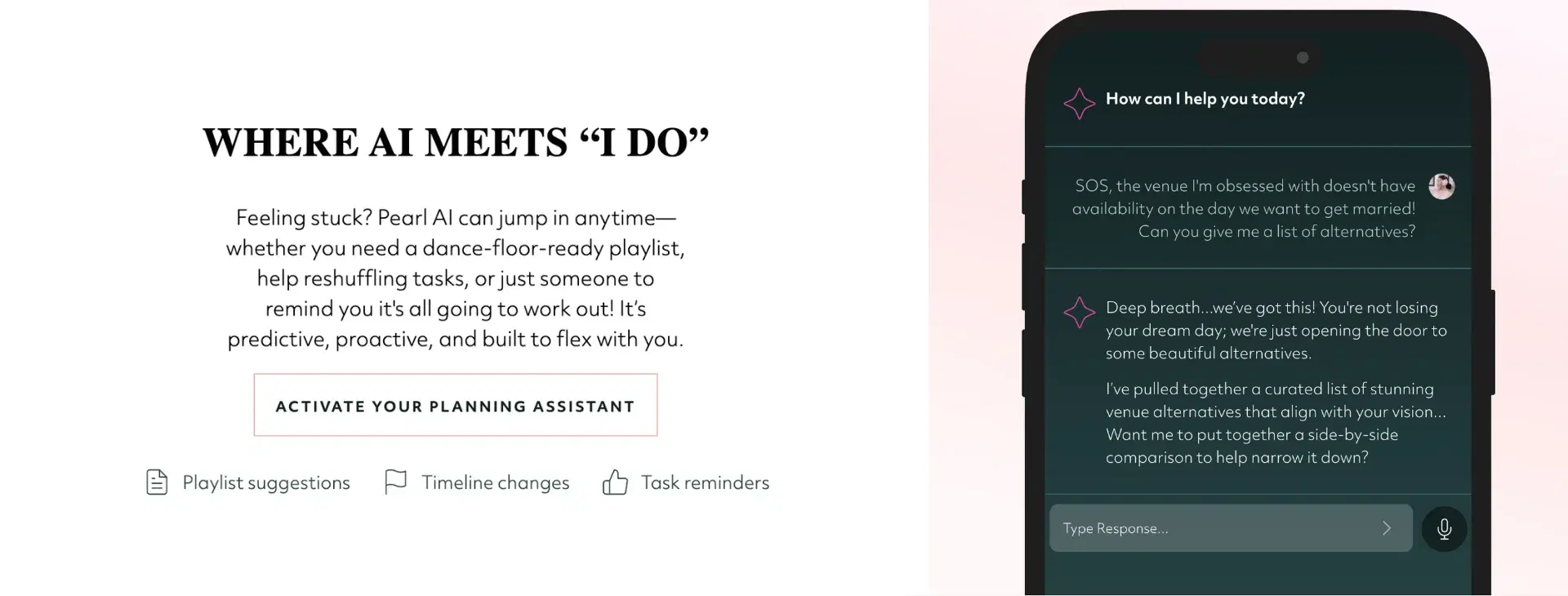
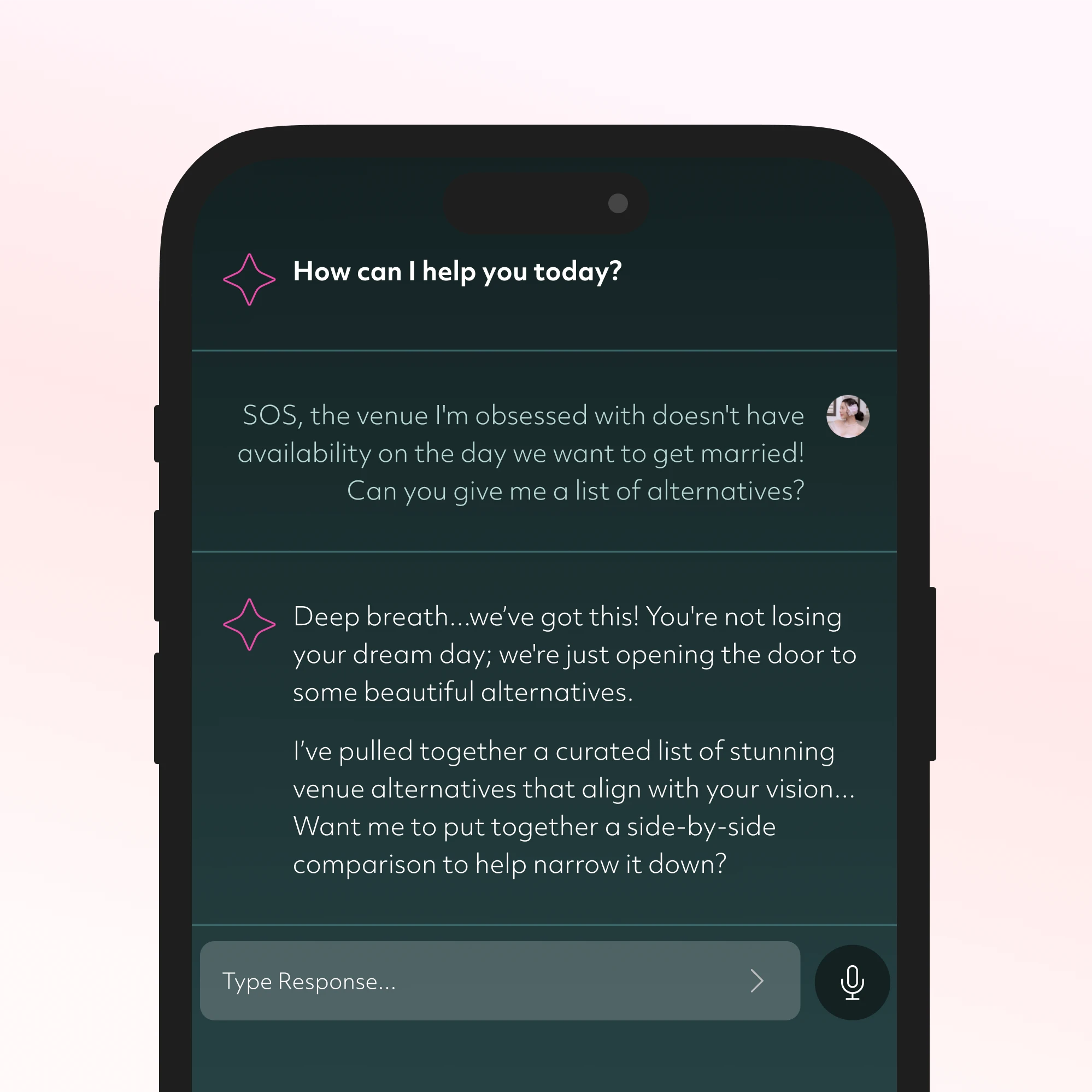
What makes modern planning feel less chaotic is that you don't have to track all of this manually. Pearl Planner generates your timeline based on your inputs and adjusts automatically if anything shifts — a date change, a vendor swap, a reprioritized budget category. Both partners see the same view, so there's no version-control problem between two people planning the same wedding.
There's no universal right way to divide a wedding budget, and any guide that tells you otherwise is giving you someone else's priorities. The only framework that matters is yours.
That said, having a starting point helps. At David's Bridal, we suggest thinking of it roughly like this: venue and catering tend to take the largest share — around 37% for most couples — followed by photography and florals at around 12% each, music at 10%, attire and beauty at 8%, and the rest distributed across ceremony, stationery, transportation, rings, cake, and favors.
But these are starting points, not rules. If photography is the thing you'll care about most in ten years, put more there. If the flowers are the centerpiece of your vision, weight it that way. A good planning tool lets you shift categories as your priorities become clearer — which they will, usually around month two or three when the abstract starts becoming real.
One thing worth building in regardless: keep 8–10% unallocated as a buffer. Not for anything specific, just for the things you didn't anticipate. It makes the last few months much less stressful.
Vendor research is genuinely one of the most time-consuming parts of planning, and it's easy to spend weeks comparing options without making any actual progress.
The thing that helps most is sequencing it. Don't try to find every vendor at once. Start with whoever has the most limited availability in your area — usually the venue and photographer — and work outward from there. Once your date is locked, the rest of the vendor conversations become much easier because you have a fixed point to plan around.
Pearl Planner's vendor directory surfaces recommendations matched to your budget, location, and style at the point in your timeline when you actually need them. So when "Book a Florist" appears in your task list, you're already looking at options that fit — not starting from scratch.
Venue sets the tone for everything: the guest experience, the décor direction, the logistics. It's worth spending real time here.
Virtual tours have made the shortlisting process a lot faster — you can rule out spaces that won't work before committing to an in-person visit. But always visit your top two or three in person before deciding. Photos don't capture acoustics, natural light, or how a space actually feels when you're standing in it. That part matters more than most people expect.
Before you visit anywhere, know your non-negotiables: guest count, indoor vs. outdoor, rough date, and how much of the budget you're comfortable allocating to the venue. That narrows the field fast and makes every conversation more productive.
Dress shopping works best when you start around 6–9 months out. That window gives you room for ordering and alterations without the stress of a tight deadline. Going earlier than that isn't a problem — going much later can be.
In 2026, the trends are less about one dominant silhouette and more about personal expression. Detachable sleeves, subtle color, sustainable fabrics, and non-traditional silhouettes are all having a moment. But the most useful filter is simpler than any trend: does it feel like you, and will you feel good in it at hour eight of your wedding day?
At David's Bridal, standard shipping runs 3–4 days with an optional 48-hour rush, and ready-to-ship styles are available on our website if your timeline is shorter. You can book a free in-store or virtual styling session to get real guidance without any pressure. Our Diamond Loyalty program is free to join and gets you an extra 5% off every day, both in stores and online.
The guest list is one of those things that feels straightforward until you're actually in it. Start with your absolute must-haves, then work outward — it's much easier to add people than to walk back an invitation.
Save-the-dates typically go out 6–8 months before the wedding. Formal invitations follow about 6–8 weeks out, with RSVPs due 3–4 weeks before the date. Digital RSVPs are completely standard now and save a lot of back-and-forth. Pearl Planner keeps responses, dietary notes, and seating details in one place so you're not piecing it together from multiple sources closer to the date.
If your date is more than a year out, you have room to move at a comfortable pace. If you're within 12 months, start on venue and photographer first — those have the most limited availability. Pearl Planner adjusts your timeline based on how much runway you have.
It almost always does. The key is keeping your categories flexible so you can shift priorities as things become clearer. Lock in what matters most first, and let the smaller decisions follow.
The 6–9 month window is ideal. It leaves time for ordering and alterations without the pressure of a close deadline. If your timeline is shorter, ready-to-ship options are worth exploring.
Talk to your vendors directly and as early as possible — most are more flexible than you'd expect, especially if you're not asking for a full cancellation. Pearl Planner flags which conversations need to happen if your date or details shift, so nothing gets missed.
It helps, but it doesn't have to be equal involvement across everything. Shared visibility into the plan means one partner can lead on logistics while the other weighs in on decisions — without anyone being out of the loop.
The couples who find wedding planning manageable aren't the ones who work harder at it. They're the ones who start with a clear vision, have a system that keeps the details organized, and give themselves permission to make decisions and move on.
Start with the Vision Quiz if you're not sure where to begin. It takes a few minutes and gives you something concrete to build from.