Two Wedding Dresses, One Big Day: The Two-Look Trend
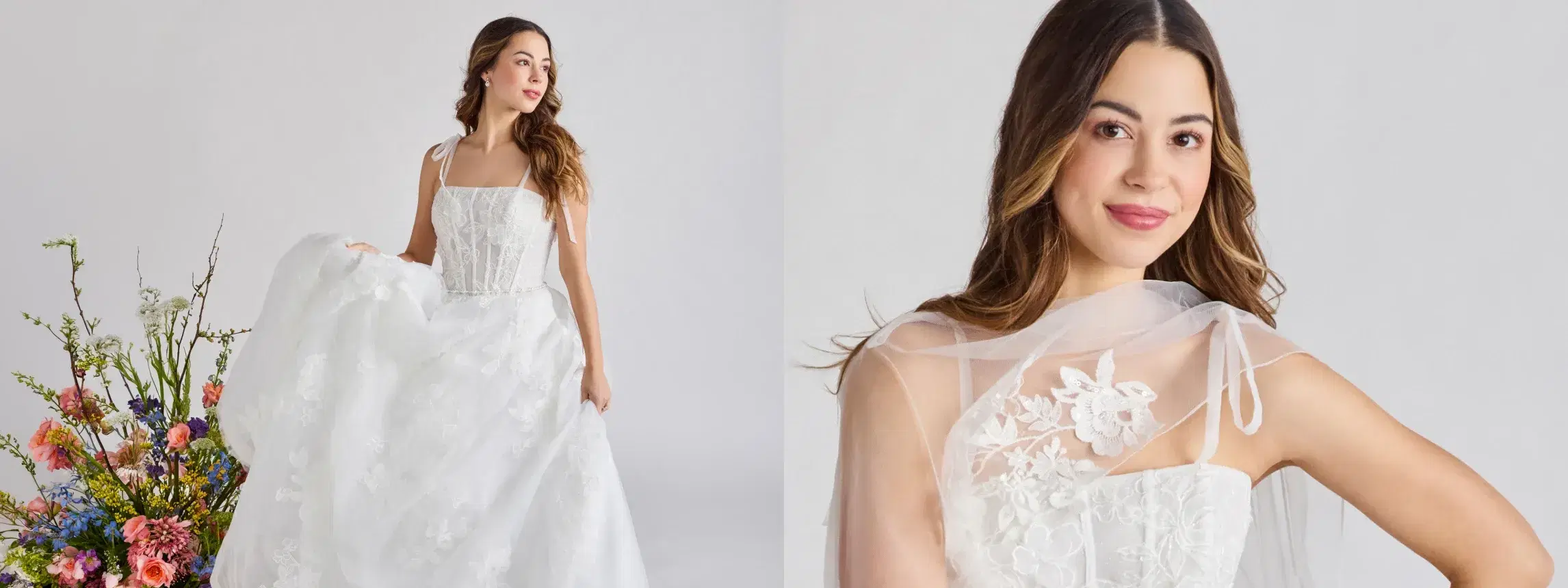
Why are so many brides wearing two wedding dresses these days? One for the ceremony, one for the reception. The short answer: because it's fun, because it lets you have two different aesthetic moments in one day, and because social media has quietly turned what used to be an occasional bridal choice into an expected one.
For the record: this isn't new. Brides have been changing outfits mid-celebration since at least the 1930s, when the "going-away suit" was standard after the reception ended. The two-look wedding has been growing steadily since around 2015. What's changed is who sees it and how fast.
Below: a quick history, the recent data behind the surge, and how to actually plan for two looks if you're weighing it for your own wedding.
The idea of a bride wearing two outfits on her wedding day isn't a 2020s invention. In the 1930s and 1940s, a bride typically changed out of her wedding gown into a tailored "going-away suit" for the departure to her honeymoon or her wedding-night lodgings. Formal wear stayed for the ceremony and dinner. Traveling clothes came out for the exit.
Fast forward through decades of evolving wedding culture, and the going-away outfit turned into the after-ceremony look, then the reception look, then the second wedding dress. Each version reflected the wedding culture of its era. The current version—a full second bridal gown, or a dance-floor-ready reception look with its own aesthetic—started building around 2015 and has been growing ever since.
The social platforms brides use to plan have shifted, and that shift is doing most of the work. According to recent data, 59% of couples surveyed use TikTok most often for wedding planning, ahead of Pinterest for the first time in the wedding-inspiration category. That's a real change in where wedding ideas come from and how quickly they spread.
Two-look brides are highly visible on TikTok specifically. The outfit-change reveal is genuinely made for the format—short-form video, a payoff moment, and a strong visual hook. So when a bride watches five or six two-look wedding videos on her FYP, that becomes the mental model of what a modern wedding looks like.
It's the same reason first-look reveals, choreographed first dances, and reception exits all get more attention now than they did a decade ago. Short-form video rewards moments. The two-look wedding is a moment.
If you're weighing whether to do two looks, the honest starting question is: are you doing this because it feels right for you, or because Instagram says you have to? Both are legitimate reasons, but they lead to different budgets and planning approaches.
Comfort and mobility. Ceremony gowns often have longer trains, heavier fabrics, and more structured bodices. A reception look can be lighter, shorter, and easier to dance in. If you want to spend the reception on the dance floor without wrangling six feet of tulle or stressing about a bustle, that's a real reason to change.
Aesthetic range. Some brides want the timeless ceremony gown AND the modern, sexier, more current reception look. Two dresses let you have both without compromising on either.
Budget and construction. Two dresses cost more than one. But you don't have to spend equally on both. A lot of brides put the biggest budget on the ceremony gown and a smaller budget on a shorter, simpler reception dress that still delivers a distinct moment.
The dress that carries the weight of the day. Full gown, formal silhouette, longer train, heavier fabrics, all the construction detail. This is the one in the processional photos, the altar photos, the family portraits. Traditional is common here—ballgown, A-line, mermaid, sheath, whatever's authentic to your vision—but the point is that the ceremony gown is designed to be the star of the show.
The dress built for movement and second-half energy. A shorter length is common (midi, mini, or knee-length), but not required. Sheath, slip, or column silhouettes let you actually dance. Statement details—corset detailing, sheer panels, dramatic embellishment, unexpected color—give the reception look its own identity, separate from the ceremony gown. It doesn't have to compete with the ceremony dress. It just has to be its own thing.
Two dresses don't have to match. In fact, most of the time they shouldn't. But they should read like they belong to the same bride, at the same wedding, on the same day. A few coordination principles:
Same aesthetic palette. If your ceremony gown is romantic-vintage, a hyper-modern reception look will read as costume-changey. If that’s what you want, go for it! Or stay inside the same overall aesthetic universe, even when the dresses look different.
A shared detail or thread. Beading style, embellishment placement, a color echo, a similar neckline. One detail carried through both dresses helps them read as intentional rather than random.
Photograph-tested before the day. Try both dresses with your hair, makeup, and jewelry in the same session before the wedding. See them side by side. Make sure the transition tells a story.
The two-look wedding sits inside a larger reality of the modern bridal era: brides are dressing for more moments than just the wedding day itself. The dress conversation started expanding years ago, and the two-look wedding is one visible piece of it.
The most common reasons: comfort and mobility (a lighter, shorter reception dress lets you actually dance), aesthetic range (you get a traditional ceremony gown AND a modern reception look without compromising), and the desire for a distinct visual moment for each half of the day. The two-look wedding has been growing in popularity since around 2015 and is now widely visible on TikTok and Instagram.
-606e2049-6af0-4e37-adf4-1a6c7410becc.png&w=3840&q=75)
A reception dress is a second dress a bride changes into after the wedding ceremony, worn for the reception itself. It's typically shorter, lighter, and easier to move in than the ceremony gown—often a midi, mini, knee-length, sheath, or slip silhouette—and carries its own aesthetic identity distinct from the ceremony dress.
No. A single wedding dress remains a completely traditional and appropriate choice. Two dresses is a personal call based on comfort preferences, aesthetic goals, and budget—not a requirement.
A ceremony dress is typically a full gown—formal silhouette, longer train, heavier construction—designed to carry the weight of the ceremony, family portraits, and processional photos. A reception dress is designed for movement and second-half energy—usually shorter length, lighter fabric, more contemporary silhouette, with its own aesthetic identity.
The modern two-look wedding has been growing steadily since around 2015. But bridal outfit changes have historical roots going back to the 1930s and 1940s, when brides typically changed out of their wedding gowns into tailored "going-away suits" after the reception. The current version—a full second bridal look for the reception—is the latest evolution of a decades-old tradition.
It's not a requirement. It's also not a fad—brides have been changing outfits mid-day for close to a century. What's different now is the visibility, the aesthetic range that's available, and the social-media surge that's turned the outfit change into an anticipated moment rather than a private one.
Written by Andrea Pesce, Senior Copywriter at David's Bridal. Find more of her work on the David's blog.