Luxury Wedding
•04 min read
The elevated romantic garden wedding represents a sophisticated convergence of natural beauty and architectural refinement. Your wedding planner coordinates multiple design elements to create an atmosphere where manicured landscapes enhance rather than compete with your celebration's formal elegance. This aesthetic demands careful orchestration of organic textures, structured installations, and seasonal considerations that work in harmony across your multi-day celebration.
What defines elevated garden romance extends beyond simply placing elegant elements in outdoor settings. The aesthetic emerges through intentional contrast between structured design and natural grace, where architectural elements provide framework for organic beauty to flourish.
Sophisticated garden celebrations balance formality with effortless charm through strategic design choices. Your wedding planner curates elements that feel both intentional and naturally occurring:
Architectural installations that complement existing landscape features
Refined color palettes that enhance rather than compete with natural surroundings
Textural layering through fabric, florals, and structural elements
Strategic height variations creating visual depth and dimension
How do you create an elevated look in a garden setting without it feeling overdone?
The key lies in restraint and intentionality. Your wedding planner selects fewer, more impactful elements rather than overwhelming the natural beauty. Think statement installations at key focal points rather than decoration throughout every corner.
Color palettes for elevated garden celebrations typically embrace sophisticated neutrals with organic accents. Blush, ivory, sage, and champagne tones provide elegant foundation while allowing seasonal blooms to create natural focal points. Your floral designer works within these parameters to ensure cohesion across ceremony and reception spaces.
Garden wedding planning requires understanding how natural elements influence design decisions and guest experience. Your wedding planner evaluates seasonal considerations, weather contingencies, and logistical requirements that outdoor celebrations demand.
Evaluating garden venues involves assessing existing architectural features and landscape maturity. Established gardens with mature plantings provide natural structure, while newer spaces may require additional design elements to achieve desired sophistication. Your wedding planner coordinates site visits during your preferred season to understand how natural elements will appear during your celebration.
Seasonal timing influences both aesthetic and practical considerations. Spring celebrations benefit from fresh blooms but require weather flexibility. Summer events offer consistent conditions but may need additional shade considerations. Fall provides rich color palettes while winter celebrations can achieve dramatic elegance through strategic lighting and evergreen elements.
What makes a garden wedding feel luxurious rather than casual?
Luxury emerges through attention to guest comfort, sophisticated design execution, and seamless service. Your wedding planner ensures proper flooring, adequate lighting, and climate considerations that maintain elegance regardless of outdoor variables.
Multi-day garden celebrations require coordinated planning across different outdoor spaces. Your wedding planner manages vendor access, power requirements, and guest flow between ceremony and reception areas. Pearl Planner helps track these complex logistics while your wedding planner handles execution details.
Sophisticated garden wedding decor balances natural beauty with refined installations. Your design team creates focal points that enhance rather than compete with existing landscape features.
Garden-style floral arrangements for elevated celebrations incorporate architectural elements alongside organic textures. Your floral designer might combine structured elements like geometric vessels with flowing garden roses and seasonal foliage. Statement installations at ceremony altars or reception entrances create dramatic focal points while smaller arrangements maintain intimate elegance throughout guest areas.
Seasonal bloom integration ensures your floral design feels naturally occurring rather than imposed. Spring celebrations might feature flowering branches and early perennials, while autumn events could incorporate rich dahlias and textured grasses. Your floral designer coordinates with your wedding planner to ensure availability aligns with your celebration timeline.
Elevated garden weddings often combine vintage and contemporary furniture to create sophisticated seating arrangements. Your wedding planner might suggest mixing antique farm tables with modern ghost chairs, or pairing rustic wooden benches with elegant linens and sophisticated place settings.
Ceremony installations require particular attention to scale and proportion within garden settings. Architectural arches or fabric installations should complement rather than overwhelm natural backdrops. Your design team evaluates sight lines and photographic angles to ensure structural elements enhance the overall aesthetic.
-606e2049-6af0-4e37-adf4-1a6c7410becc.png&w=3840&q=75)
Garden wedding lighting transitions from natural daylight through golden hour into evening ambiance. Your wedding planner coordinates timing and technical requirements to maintain elegance throughout these transitions.
Golden hour ceremony timing provides the most flattering natural light for both guests and photography. Your wedding planner works backward from optimal lighting conditions to establish ceremony start times. Evening receptions benefit from layered lighting approaches that gradually transition from ambient natural light to sophisticated artificial illumination.
Candle installations create intimate warmth while string lights provide gentle overhead illumination. Your lighting designer might incorporate uplighting to highlight architectural garden features or create dramatic shadows through existing trees and plantings. The goal remains enhancing natural beauty rather than competing with it.
What lighting works best for evening garden receptions?
Layered lighting creates the most sophisticated ambiance. Combine ambient string lights or chandeliers with intimate candle groupings and strategic uplighting. Your lighting designer ensures adequate illumination for dining and dancing while maintaining romantic atmosphere.
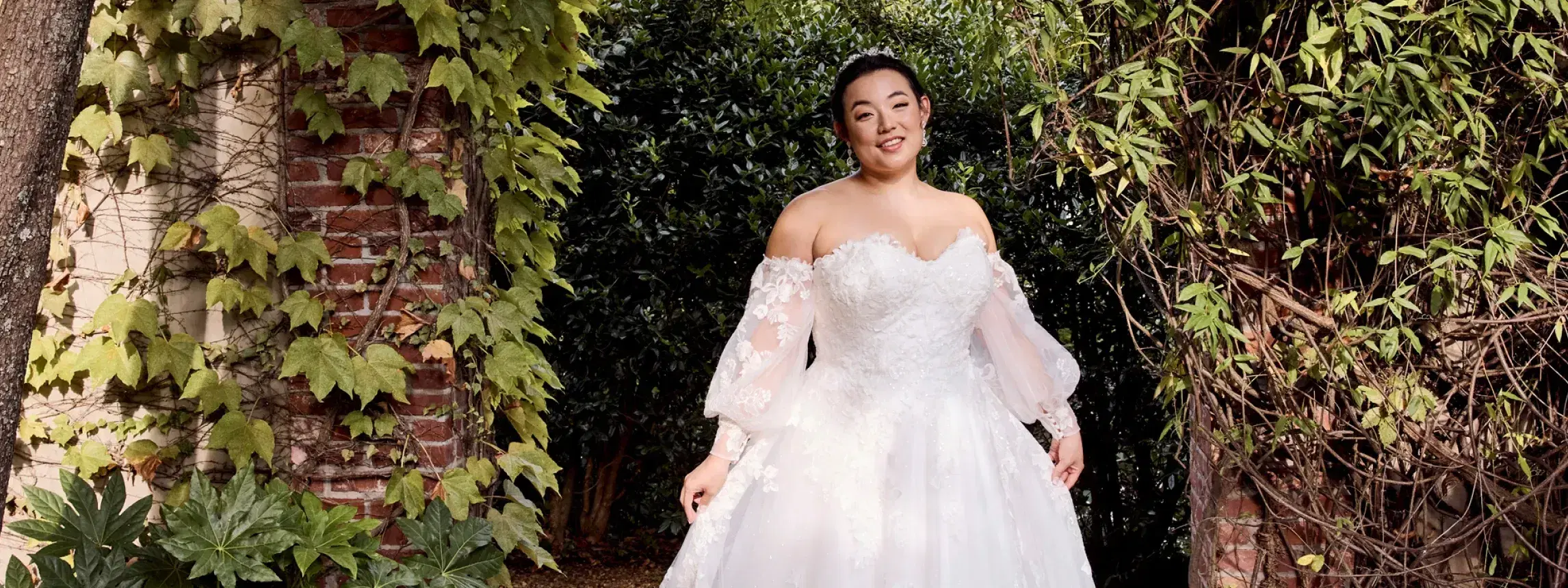
Garden wedding attire requires consideration of both aesthetic and practical elements. Your stylist at David's Bridal helps select fabrics and silhouettes that photograph beautifully while remaining comfortable in outdoor settings.
Vera Wang Bride gowns at David's Bridal offer sophisticated options that work beautifully in garden settings. Flowing fabrics like silk chiffon or crepe move gracefully in outdoor environments while maintaining elegant structure. Your stylist considers train length and fabric weight to ensure your gown photographs beautifully against natural backdrops without practical complications.
Accessory coordination becomes particularly important in garden settings where natural elements provide visual competition. Your stylist might suggest simpler jewelry to allow your gown and natural surroundings to remain focal points, or incorporate organic elements like pearl details that complement the garden aesthetic.
Elevated garden celebrations require clear communication about appropriate attire and practical considerations. Your wedding planner provides guests with specific guidance about footwear for garden terrain and seasonal weather preparation. This attention to guest comfort maintains the sophisticated atmosphere you've curated.
Your wedding planner coordinates elements like parasols for sunny ceremonies or elegant wraps for evening receptions. These practical touches ensure guest comfort while maintaining aesthetic cohesion throughout your celebration.
The elevated romantic garden wedding achieves its sophistication through careful balance of natural beauty and refined design execution. Your wedding planner orchestrates these complex elements while Pearl Planner helps track the numerous decisions and vendor coordination required. The result feels effortlessly elegant while representing significant planning sophistication behind the scenes.