Editorial
•04 min read
When planning an Indian wedding (or attending one as part of the celebration) you may find yourself asking: is it sari or saree? Short answer? Both spellings refer to the same timeless garment, but their usage often varies by region, culture, and context. We know that what matters most isn’t how it’s spelled, but how the sari is worn and experienced across wedding moments—from bridal ceremonies to coordinated bridesmaid looks to guest attire that honors tradition with style. This guide breaks down the difference in spelling, the meaning behind this iconic silhouette, and how saris show up beautifully at Indian weddings today.
If you’re wondering about the difference between sari and saree, here’s the plain truth: there isn’t one! Both spellings refer to the same iconic garment and are used interchangeably today. The distinction lies primarily in language and geography rather than design or meaning. “Sari” more closely reflects the spelling used across South Asia, while “saree” is a Westernized variant that became common through English transliteration. Regardless of spelling, they describe the same timeless silhouette—rich in history, cultural significance, and modern versatility.
If sari and saree describe the same garment, why do both spellings appear so frequently? The answer lies in language and geography, not fashion.
“Sari” reflects the spelling used across South Asia, closely tied to the garment’s origins and the languages in which it has been worn for centuries. “Saree” emerged through English transliteration, becoming more common in Western countries as the garment gained global visibility through fashion, media, and retail.
Today, both spellings are widely understood and accepted. Brides, guests, and designers may use one or the other based on region, personal preference, or cultural familiarity. Regardless of spelling, the sari itself remains unchanged—timeless, versatile, and deeply meaningful.
The sari holds a special place in Indian weddings, appearing across ceremonies, celebrations, and generations. While often associated with brides, saris are worn just as beautifully by bridesmaids, family members, and guests, creating a sense of continuity and cultural connection throughout the celebration.
Depending on the wedding and region, saris may be worn for:
Wedding ceremonies
Receptions
Engagement celebrations
Family blessings or ancillary events
What makes the sari so enduring is its adaptability. Fabric, drape style, blouse design, and embellishment level can all shift to reflect the formality and meaning of each moment.
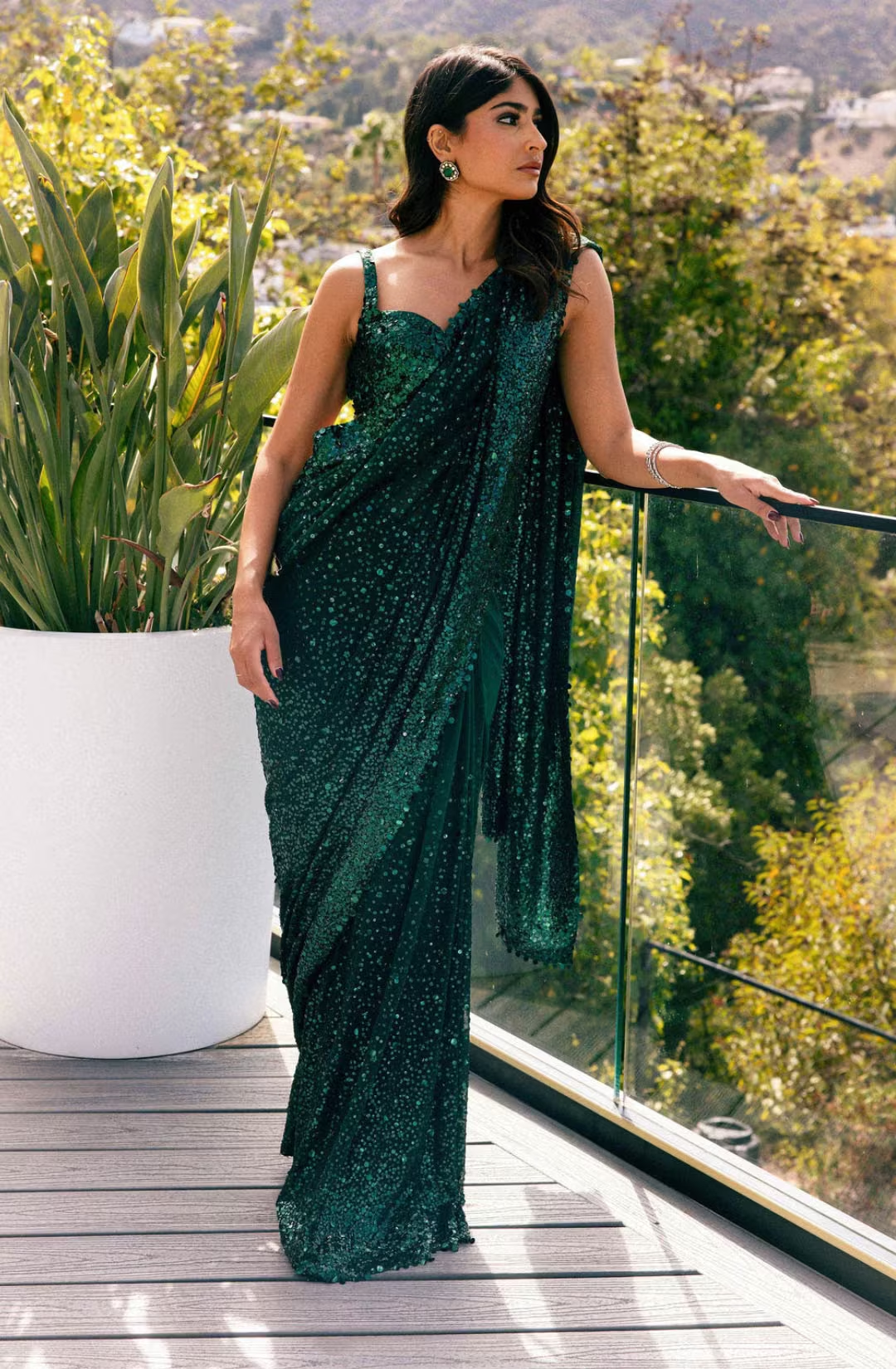
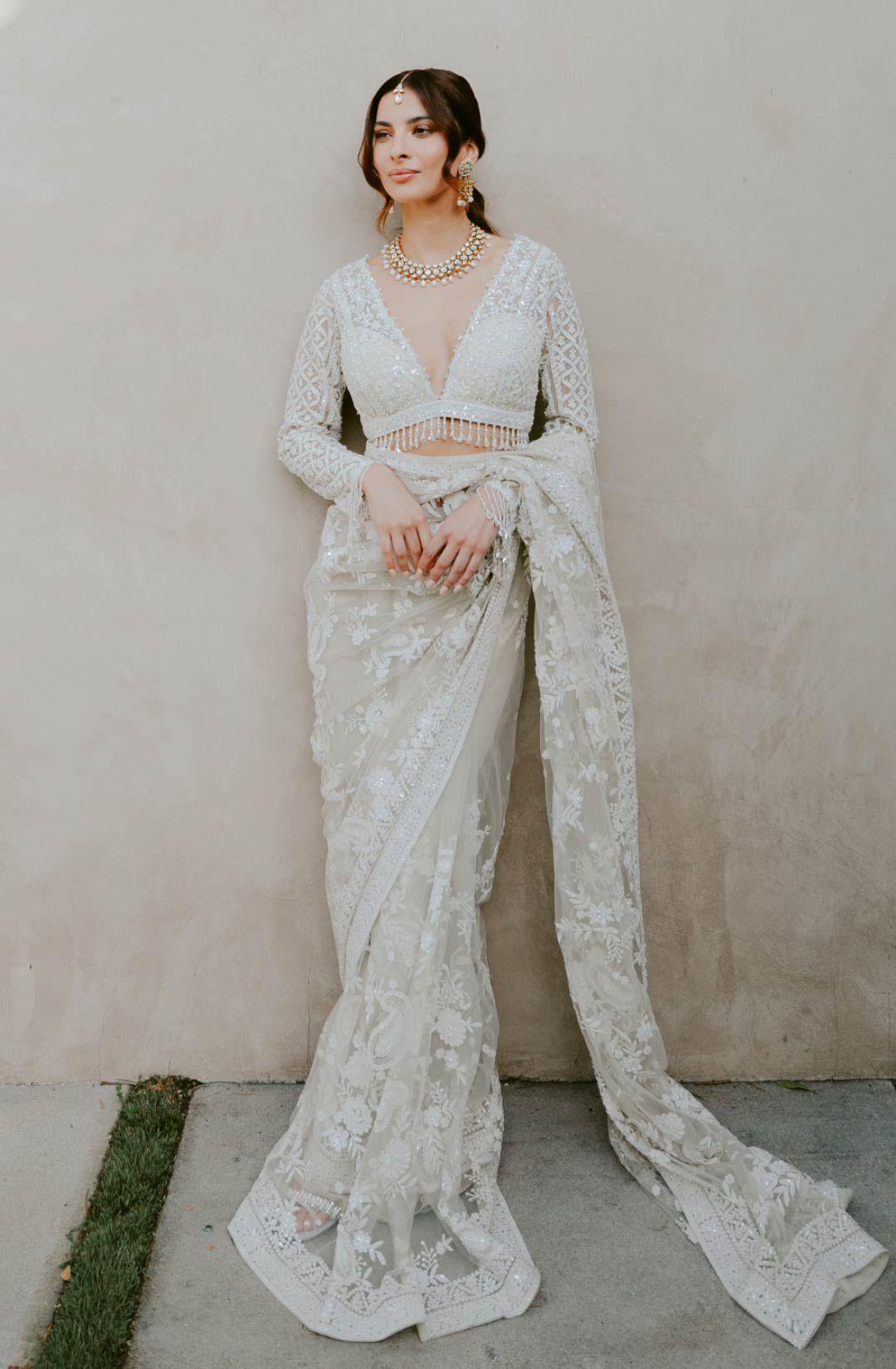
For many brides, a sari represents tradition, elegance, and self‑expression all at once. Bridal saris are often crafted from luxurious fabrics—silk, satin, chiffon, or organza—and may feature intricate embroidery, beadwork, or hand embellishment.
Some brides choose a sari for their main ceremony, while others opt for one as a second look during the reception or a meaningful pre‑wedding event. Modern styling has expanded what a bridal sari can look like, with contemporary blouse silhouettes, lighter draping techniques, and thoughtful design details that feel both rooted and modern.
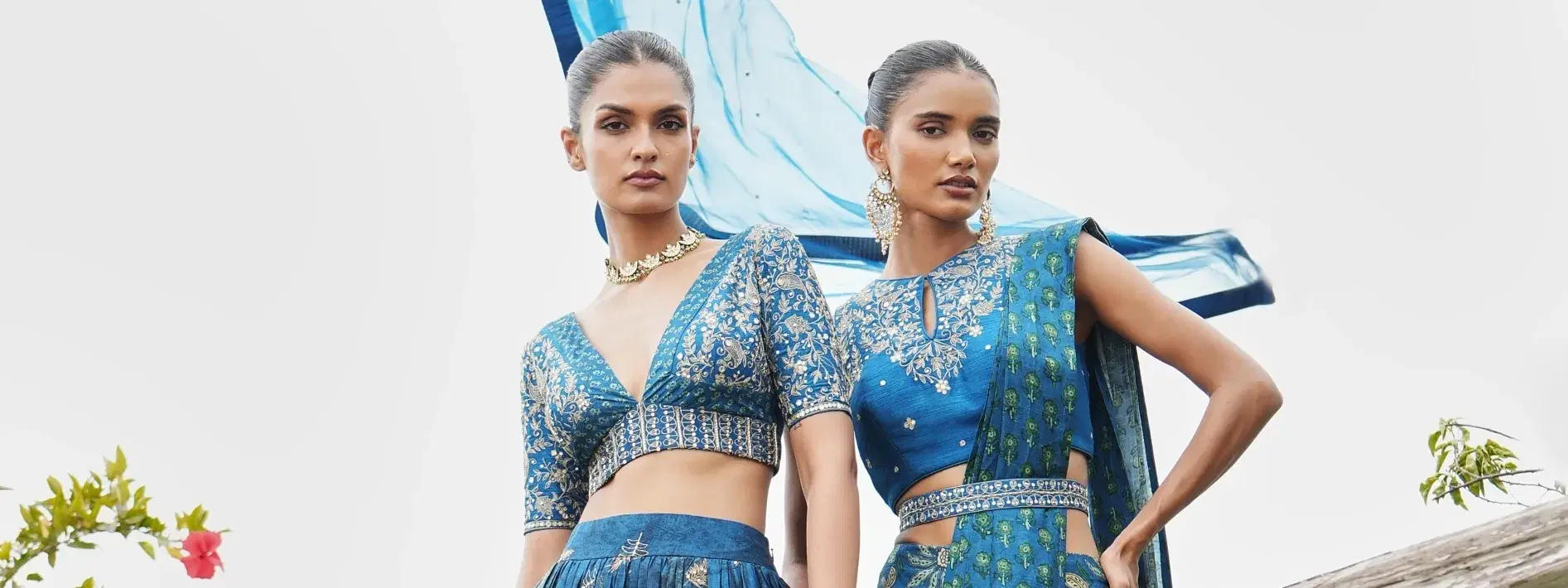
Saris are a popular and cohesive choice for bridesmaids and wedding‑party members, especially at multi‑day Indian weddings. Coordinated saris create visual harmony while still allowing room for individuality through color shades, drape styles, or blouse variations.
For family members, saris are often chosen as a way to honor tradition while participating fully in the celebration. Whether richly embellished or elegantly understated, saris help tie the entire wedding aesthetic together.
Wearing a sari as a wedding guest is not only appropriate—it’s often encouraged. Saris allow guests to dress respectfully while still embracing the vibrancy and joy of the occasion.
When choosing a wedding‑guest sari, consider:
The time of day (lighter fabrics for daytime, richer textures for evening)
Embellishment level (festive without overshadowing the bride)
Comfort and ease of movement for long celebrations
Guests of all backgrounds frequently wear saris to Indian and fusion weddings, making them a welcoming and expressive option for anyone attending.
Contemporary sari design continues to evolve, blending heritage craftsmanship with modern silhouettes and styling. Lighter fabrics, statement blouses, and versatile draping styles have made saris more accessible and wearable across events.
Many modern sari designs are created with longevity in mind—pieces intended not just for one celebration, but for multiple milestones over time. This approach reflects a growing appreciation for quality, craftsmanship, and garments meant to be cherished.
Whether you’re shopping as a bride or a guest, a few considerations can help guide your choice:
Fabric weight and comfort
Quality of craftsmanship and embellishment
Ease of draping or styling
Versatility for future wear
A thoughtfully chosen sari becomes more than an outfit—it becomes part of your story.
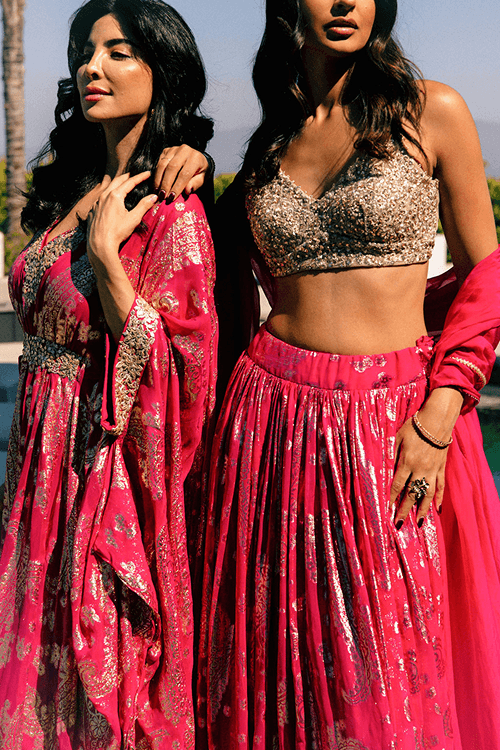
At David’s, our approach to cultural wedding fashion is about intention and artistry—which is why we’ve partnered with Kynah, a luxury Indian bridal and occasionwear brand known for its modern interpretation of South Asian design. The saris curated from Kynah reflect a balance of tradition and contemporary style, featuring elevated fabrics, refined embellishment, and silhouettes designed with longevity in mind. Each piece is selected for its craftsmanship and storytelling, offering brides, wedding parties, and guests saris that feel meaningful, wearable, and worthy of being cherished long after the celebration itself.
No. Both spellings refer to the same garment. The difference is linguistic, not stylistic.
“Sari” more closely reflects South Asian spelling traditions, while “saree” is a Western transliteration.
Absolutely. Saris are a common and celebratory choice for wedding guests.
Yes. Modern designs and styling make saris ideal for traditional, fusion, and contemporary celebrations alike.
Both are iconic. Saris tend to feel more fluid and timeless, while lehengas offer volume and structure. Many weddings include both.
Whether you spell it sari or saree, the garment itself remains one of the most iconic and expressive pieces in Indian wedding fashion. Worn by brides, bridesmaids, family members, and guests alike, the sari continues to evolve while honoring its roots—proving that tradition and modernity can exist beautifully side by side.