Trend Inspiration
•03 min read
Weddings in 2026 are defined by softness, subtlety, creativity, and a dramatic shift away from old traditions. Across fashion runways, design studios, and real‑couple planning journeys, the year’s biggest trends reveal a shared desire for texture, warmth, intentional design, and meaningful updates to long‑held wedding classics. These are the trends shaping the year ahead.
In 2026, one of the biggest shifts in engagement culture is the continued rise of lab‑grown diamonds. Couples are increasingly choosing them for their accessibility, ethical sourcing, and the ability to select larger or higher‑clarity stones for the same budget. This aligns with how real couples are thinking: modern weddings favor intention over spectacle, and jewelry is no exception.
Lab‑grown diamonds are chemically identical to natural stones, making them visually indistinguishable—a fact that has propelled their popularity over the past several years. Their affordability also reduces pressure on couples who want a stunning ring without pushing financial boundaries. While both lab‑grown and natural diamonds depreciate, many couples care more about symbolism than resale value, making lab‑grown options a smart fit for current priorities.
Pantone’s 2026 Color of the Year, Cloud Dancer, is shaping wedding aesthetics everywhere. Described as a warm, creamy, almost ethereal white, it acts as a versatile base shade that blends softness with modern refinement. It’s less stark than pure white and warmer than ivory — an ideal bridge for today’s layered, textural designs.
Florals: airy arrangements using roses, ranunculus, orchids, lunaria, and bleached foliage.
Stationery: letterpress suites, layered papers, vellum details, and sculptural envelopes that play up tone‑on‑tone depth.
Bridal party fashion: monochromatic white bridesmaid looks that photograph beautifully and feel modern.
Décor: linens, candles, draping, and signage all taking on Cloud Dancer’s serene softness.
Designers and planners agree that the key to this palette is texture, not color. Layering materials—matte ceramics, washed linen, heavy silk, frosted glass, brushed metals—builds an atmosphere that feels elevated without ever feeling flat.
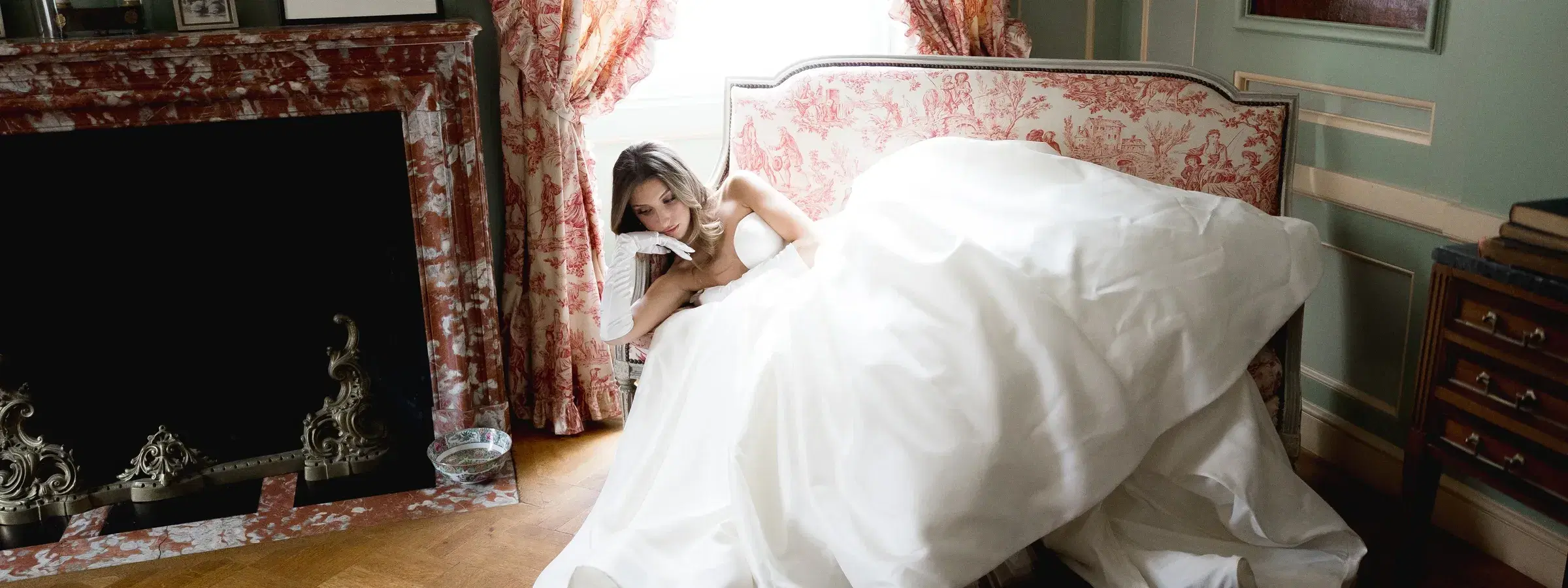
Bridal fashion in 2026 is defined by a return to structured romance—and the most talked‑about silhouette is the basque waist. This shape, which gently extends past the natural waistline into a sculpted point above the hips, is taking over bridal runways again. Its resurgence signals a shift toward gowns that blend softness with architectural detail.
Basque waists paired with cathedral‑length trains
Scoop necklines and narrow straps
Minimal, high‑sheen silk fabrics without appliqué
Voluminous bubble skirts and ballerina‑inspired draping
Designers are doubling down on couture‑level material choices. Heavy silk mikado, organza, and tailored satin are especially popular because they complement the year’s textural, layered décor trends. Brides seeking minimalism are gravitating toward dresses that feel timeless while still offering subtle drama.
If 2025 was defined by airy minimalism, 2026 replaces it with tactile visual richness. Décor is leaning into dimensionality—not through color, but through materials, draping, and lighting.
Velvet, rich organza, washed linen, and fabric‑lined walkways are becoming statement décor pieces. Draping is used not just overhead but also behind bars, around seating lounges, and across ceremony aisles to create softness and movement.
One of the year’s most exciting shifts is the rise of lamps in wedding lighting design. Instead of relying solely on candles or uplighting, couples are bringing in table lamps, mini‑lamps, and shaded lighting elements to give receptions the warmth and intimacy of a high‑end restaurant. Warm‑white bulbs, frosted glass, linen shades, and alabaster lanterns create the dimensional glow that makes Cloud Dancer palettes feel cinematic.
Ceremony aisles lined with layered rugs or tonal carpets are having a major moment. The effect is cozy, editorial, and reminiscent of global destinations and boutique venues.
Curved or serpentine tables allow designers to break away from traditional layouts and create more fluid floor plans. While not the most functional option for every wedding, when executed well they lend an artistic feel to the room.
Large signage displays have dominated wedding Pinterest boards, but they’re becoming less practical for real‑world planning. Escort cards are back—simple, chic, and easy to adapt to last‑minute changes.
Across all categories, “soft luxury” is the defining mood of 2026 weddings. Couples are moving away from bold contrasts and leaning into tonal palettes, delicate fabrics, sculptural florals, and layered neutrals. It’s less about matching and more about curating a feeling—the overarching theme for weddings this year.
For even deeper insight into how real couples and planners are thinking about 2026, watch the full conversation from The Pre Nup below.