Luxury Wedding
•02 min read
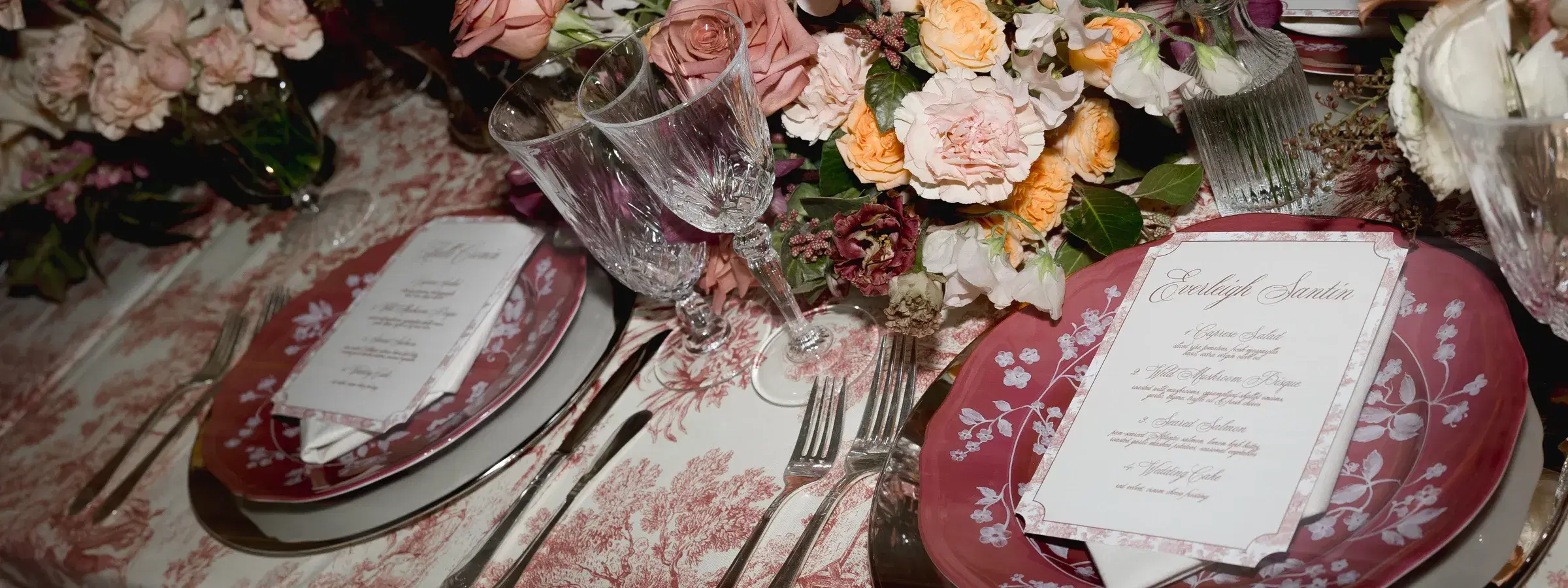
Custom menu card design for plated dinners represents more than aesthetic choice—it establishes the culinary narrative before the first course arrives. Wedding planners orchestrating multi-day celebrations understand that these carefully crafted pieces bridge anticipation and experience. When guests encounter thoughtfully designed menu cards at their place settings, the evening's progression becomes clear, sophisticated, and intentional.
What defines exceptional wedding menu design extends beyond typography and paper selection. The most compelling menu cards create dialogue between the culinary program and the celebration's broader aesthetic vision. Wedding planners consider these elements to ensure seamless integration with table setting design, from charger plates to floral arrangements.
Bespoke menu printing allows for material choices that complement the evening's formality. Handmade papers, letterpress techniques, and foil applications transform functional information into keepsake-quality pieces. The tactile experience of quality cardstock reinforces the investment in every celebration detail.
Premium cardstock provides the substantial feel expected at formal dinner events. Textured papers—from linen finishes to cotton blends—add sophistication without compromising readability. Wedding planners often coordinate paper selections with the invitation suite to maintain design cohesion throughout the celebration weekend.
Elegant menu templates begin with typography that balances readability with refinement. Serif fonts convey traditional formality, while carefully selected sans-serif options offer contemporary sophistication. The hierarchy between course headings, descriptions, and wine pairings guides guests through the culinary journey without overwhelming the design.
White space becomes particularly crucial in fine dining menu layouts. Generous margins and thoughtful spacing prevent cramped presentations that diminish the experience. Wedding planners understand that rushed or cluttered designs undermine the investment in premium ingredients and preparation.
Multi-course presentations require careful consideration of information density. Each course description should provide enough detail to build anticipation while maintaining the element of surprise. Ingredient highlights, preparation methods, and regional sourcing can elevate simple dish names into compelling narratives.
Personalized menu cards function as extensions of the overall wedding stationery design program. Color palettes, monogram treatments, and decorative elements should echo throughout the celebration materials. This consistency reinforces the thoughtful curation that defines luxury celebrations.
Table setting design considerations influence menu card dimensions and placement. Classic formal dimensions integrate seamlessly with most place settings, while smaller options work well for intimate gatherings. Wedding planners coordinate these specifications with venue requirements and service protocols.
Formal dinner menu designs can reflect seasonal ingredients and cultural traditions without compromising sophistication. Subtle color shifts, botanical illustrations, or traditional motifs add personal meaning while maintaining elegant presentation standards.
Menu cards require adequate production timelines, particularly for custom printing techniques. Letterpress, foil stamping, and embossing processes typically need extended production timelines. Wedding planners build these requirements into their vendor coordination schedules to ensure seamless delivery.
Final guest counts and dietary accommodations influence printing quantities and design modifications. Professional wedding planners maintain flexibility in their menu card specifications to accommodate last-minute changes without compromising quality or presentation standards.
Frequently Asked Questions
How do wedding planners coordinate menu cards with dietary restrictions?
Professional wedding planners typically create discrete notation systems or separate cards for guests with specific dietary needs, maintaining design consistency while ensuring clear communication.What printing techniques work best for outdoor celebrations?
Weather-resistant finishes and heavier cardstock weights prevent damage from humidity or wind. Matte finishes reduce glare in bright outdoor settings.Can menu cards incorporate interactive elements?
QR codes linking to detailed ingredient information or wine pairing notes can enhance the dining experience while maintaining traditional design aesthetics.
Custom menu card design for plated dinners represents a meaningful investment in guest experience. Wedding planners help couples understand how these elements contribute to the overall celebration narrative.
The most successful menu card designs emerge from collaboration between wedding planners, couples, and design professionals. This coordinated approach ensures that every element—from paper selection to final placement—reinforces the sophistication and intentionality that defines exceptional celebrations. Pearl Planner's design coordination tools help wedding planners manage these collaborative processes while maintaining the elevated standards their clients expect.